
 English
 简体中文
简体中文
Content
Beyond the Shell: Understanding Impact Protection
For decades, the hard hat has been the undisputed symbol of safety on construction sites and industrial complexes. This familiar dome of high-density polyethylene or fiberglass is a crucial line of defense against falling debris, bumps, and electrical hazards. However, the hard hat is only half the story. The true innovation in head protection isn’t just in the rigid outer shell, but in the less-visible technology that cushions the blow: the suspension system and, increasingly, the Hard Hat Pad.
The primary job of any head protection system is to absorb and dissipate kinetic energy. When an object strikes the hard hat, the outer shell resists penetration and distributes the force over a wider area. Crucially, the suspension system—the web of straps inside the hat—works to create a gap between the shell and the wearer’s skull. This gap allows the shell to deform slightly and provides distance for the impact to slow down, minimizing the force transmitted to the head.
The Evolution of the Hard Hat Interior
Historically, the suspension system itself provided the main padding, often using simple plastic or fabric straps. While effective for basic impact, these systems had drawbacks:
- Comfort and Fit: They could be uncomfortable, leading workers to adjust them improperly or even remove them, compromising safety.
- Sweat Management: Poor ventilation and material choice often led to excessive sweating, which could cause the hat to slip.
- Specific Impact Needs: Traditional designs were less optimized for rotational forces and oblique impacts, which are increasingly recognized as causes of severe brain injury.
Introducing the Hard Hat Pad
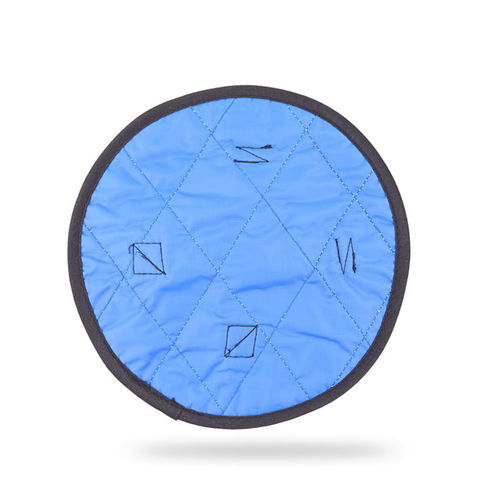
The Hard Hat Pad represents a significant step forward in addressing these limitations. These pads are typically affixed to the suspension system or directly to the inside of the hard hat shell, often at the forehead, crown, and sometimes the nape of the neck.
They are generally made from advanced materials like specialized foams, gels, or elastomeric polymers, engineered for superior energy absorption. Unlike simple foam, these modern materials often possess visco-elastic properties—meaning they act as both a viscous fluid and an elastic solid—allowing them to effectively absorb and dissipate a wide range of impact forces.
The Science of Softness: Material Innovation
The effectiveness of a Hard Hat Pad lies in its material science. Engineers face a complex problem: creating a material that is soft enough for all-day comfort yet firm enough to prevent a dangerous bottom-out event during a high-energy impact.
Specialized Foams and Gels
Many top-tier pads utilize closed-cell foams, which are light and resistant to moisture. Some incorporate advanced polymer gels that mimic the natural cushioning properties of biological tissue. These gels are excellent at dampening vibrations and providing a “custom-fit” feel.
Rotational Impact Mitigation
Perhaps the most critical advancement a well-designed Hard Hat Pad provides is protection against rotational forces. When the head is struck at an angle, the force doesn’t just go straight through; it causes the head to rotate rapidly, a motion strongly linked to concussions and other traumatic brain injuries (TBIs). Some pads integrate low-friction layers or utilize designs that allow for a slight, controlled slip between the pad and the head, effectively diverting the rotational energy away from the brain. This is often an ancillary benefit to comfort and sweat management, making the system a powerful multi-functional component.
Improved Wearer Compliance and Hygiene
Beyond the critical function of impact absorption, the Hard Hat Pad plays a major role in worker comfort and hygiene, which in turn boosts safety compliance.
- Enhanced Comfort: A more comfortable hard hat is a hard hat that stays on. High-quality pads evenly distribute pressure, eliminating uncomfortable “hot spots” that can cause headaches or irritation.
- Moisture Wicking: Many pads are designed with moisture-wicking materials and perforated structures to draw sweat away from the skin, keeping the worker cooler and the hard hat more stable on the head. This reduces the urge for workers to remove their hard hats in hot conditions.
- Easy Cleaning and Replacement: Being a modular component, the Hard Hat Pad can be easily removed, washed, or replaced when soiled or worn out. This improves the overall hygiene of the safety equipment, which is a significant factor on sites where equipment is used daily in demanding conditions.
The humble Hard Hat Pad is more than just a piece of foam; it is a critical piece of advanced engineering that enhances comfort, improves hygiene, and—most importantly—provides a superior level of defense against the complex forces that threaten the health and well-being of the essential workforce. It’s the invisible shield making the iconic hard hat a truly modern piece of protective gear.

 3rd Floor, East Gate, No. 2599 Park Road, Sheng Ze Town, Wu Jiang District, Suzhou City, Jiangsu Province
  +86- 0512-63519080
 +86-13584404311
  FQsales1@163.com