
 English
 简体中文
简体中文
Content
- 1 What Is a Cooling Vest and Why Do People Use One?
- 2 The Four Main Types of Cooling Vests
- 3 Cooling Vest Types Compared Side by Side
- 4 Who Needs a Cooling Vest Most?
- 5 Key Features to Look for in a Cooling Vest
- 6 How to Use a Cooling Vest for Maximum Effectiveness
- 7 What to Check When Buying a Cooling Vest
What Is a Cooling Vest and Why Do People Use One?
A cooling vest is a wearable garment designed to lower or maintain the core body temperature of the wearer by absorbing or dissipating heat from the torso. The torso — covering the chest, back, and abdomen — is the most effective part of the body to cool because it contains the largest concentration of major blood vessels supplying the vital organs. Cooling the blood flowing through this area reduces the thermal load on the entire body far more efficiently than cooling the extremities alone.
People use cooling vests in situations where the ambient heat or physical exertion load exceeds what the body can manage through normal thermoregulation — sweating, breathing, and blood flow redistribution. Left unmanaged, excessive heat load leads to heat stress, heat exhaustion, and in severe cases, life-threatening heat stroke. A well-chosen cooling vest extends the safe working or exercising time in hot conditions, improves cognitive performance (which degrades significantly with core temperature rise), reduces fatigue, and in occupational settings, directly reduces workplace heat illness incidents.
Cooling vests are used across a wide range of contexts: industrial workers in steel mills, foundries, construction sites, and outdoor utilities; military and first responders in full personal protective equipment (PPE); endurance athletes and team sport players during warm-up and recovery; people with multiple sclerosis (MS) and other neurological conditions whose symptoms worsen with heat; and outdoor event workers, agricultural workers, and anyone regularly exposed to hot and humid working conditions. The right vest technology depends entirely on the specific combination of activity, environment, duration of use, and logistics of the deployment.
The Four Main Types of Cooling Vests
Cooling vests are not a single technology — they use several fundamentally different cooling mechanisms, each with its own performance characteristics, duration of effectiveness, weight, cost, and logistical requirements. Choosing the wrong type for your application means either insufficient cooling, impractical logistics, or both.
Ice Pack Cooling Vests
Ice pack cooling vests use pockets or pouches in the vest that are loaded with frozen ice packs before wearing. The ice absorbs heat from the body as it melts, providing direct conductive cooling to the torso. These vests deliver the most intense initial cooling effect of any vest type — the cold-to-skin temperature differential is large when fresh ice is used, and the heat absorption capacity is high. They are widely used in pre-cooling protocols for athletes (particularly endurance runners, cyclists, and football players) before competition in hot weather, and in industrial settings where a freezer is accessible for pack re-freezing between shifts.
The practical limitations of ice pack vests are their weight — a fully loaded ice vest can weigh 2–5kg, which adds meaningfully to physical load — and the duration of cooling, which is typically 30–60 minutes before the ice melts and the vest loses effectiveness. In hot, humid environments, ice melts faster. Once the ice is melted, the vest becomes just a wet, heavy garment unless packs are replaced. They require access to a freezer for re-charging, which limits their use in remote outdoor environments or mobile situations.
Phase Change Cooling Vests
Phase change material (PCM) cooling vests use specially engineered materials that absorb heat as they transition from solid to liquid at a specific, controlled temperature — typically set at 14°C, 21°C, or 28°C depending on the intended application. Unlike ice, which melts at 0°C and can feel uncomfortably cold against skin, PCM vests are engineered to maintain their cooling temperature within a comfortable, physiologically effective range. The PCM packs are activated by placing them in cold water or a refrigerator until they solidify, and they then release their stored cooling energy at a consistent temperature throughout the wear period.
The 28°C phase change temperature is the most physiologically relevant for occupational cooling — it keeps the skin surface below core body temperature (around 37°C) without causing cold discomfort, and the cooling duration is typically 2–4 hours per charge, significantly longer than ice at comparable weight. PCM vests are lighter than equivalent ice vests and maintain a more consistent cooling temperature throughout their discharge. They are the preferred technology for industrial heat stress management, military use, and anyone who needs sustained cooling over a long shift or event without freezer access. The trade-off is that PCM packs typically require 2–3 hours to re-solidify in a refrigerator (or 20–30 minutes in ice water), so spare pack sets are needed for continuous multi-shift operations.
Evaporative Cooling Vests
Evaporative cooling vests use a water-saturated fabric or pad material that cools the wearer through evaporation — the same mechanism as sweating. The vest is soaked in water, and as that water evaporates from the outer surface of the vest, it draws heat away from the body. These vests are very lightweight (typically under 500g when dry), inexpensive, and require no refrigeration — they can be recharged with any water source in minutes. They deliver continuous cooling as long as the fabric remains wet and the ambient conditions support evaporation.
The critical limitation of evaporative vests is that their effectiveness is entirely dependent on relative humidity. In dry climates (below 40% relative humidity), evaporative vests work extremely well and can provide hours of useful cooling. In humid climates (above 70% relative humidity), evaporation is greatly slowed and the cooling effect becomes minimal — which is precisely the worst-case scenario for heat stress, because high humidity also impairs the body's own sweating mechanism. Evaporative vests are well-suited for hot, dry environments: desert climates, arid industrial settings, and outdoor summer activities in low-humidity regions. They are much less effective in humid tropical, subtropical, or coastal environments.
Air-Cooled and Active Cooling Vests
Active cooling vests use a powered cooling system — typically either compressed air circulated through channels in the vest, or a small battery-powered refrigerant system — to deliver continuous, sustained cooling. Compressed air vests use vortex tubes or direct air circulation connected to a portable air supply, while refrigerant-based vests use a small compressor and heat exchanger. These systems provide consistent, temperature-controlled cooling that is independent of ambient humidity and does not require re-charging of ice or PCM packs. They are used in the most demanding industrial environments — such as blast furnaces, nuclear plant maintenance, and hazmat suit operations — where passive cooling technologies simply cannot provide sufficient or sustained cooling.
The practical constraints of active cooling vests are their complexity, weight of the power/air supply system, cost, and the need for continuous power or air supply. They are not suitable for mobile or remote applications where a power source cannot be provided, and their maintenance requirements are higher than passive vest types. For the specific high-heat industrial niches where they are applied, however, they provide cooling performance that passive alternatives cannot match.
Cooling Vest Types Compared Side by Side
Here is a direct comparison of the four main cooling vest technologies across the criteria that matter most for selection:
| Feature | Ice Pack | Phase Change (PCM) | Evaporative | Active (Air/Refrigerant) |
| Cooling Duration | 30–60 min | 2–4 hours | 1–3 hours (dry climate) | Continuous |
| Weight (charged) | 2–5 kg | 1.5–3 kg | 0.5–1.2 kg | Variable (+ power unit) |
| Recharge Method | Freezer required | Fridge or ice water | Any water source | Power / air supply |
| Humidity Sensitivity | None | None | High (poor in humidity) | None |
| Cost Range | $30–$150 | $80–$400 | $15–$80 | $200–$2,000+ |
| Best For | Pre-cooling, short bursts | Industrial shifts, military | Dry outdoor work, sport | Extreme heat, enclosed PPE |
Who Needs a Cooling Vest Most?
Cooling vests are not just a comfort accessory — for specific populations, they are a genuine health and safety tool. Here are the groups for whom a body cooling vest is most important and why:
Outdoor and Industrial Workers
Construction workers, roofers, agricultural laborers, landscapers, road workers, and utility crews spend extended hours outdoors in summer heat, often performing physically demanding work in full sun. Industrial workers in steel mills, glass plants, foundries, bakeries, and commercial kitchens face radiant heat loads far above ambient temperature. In both categories, heat stress is a recognized occupational hazard that causes thousands of hospitalizations and dozens of workplace fatalities every year. Cooling vests — particularly PCM vests for humid environments and evaporative vests for dry climates — are an effective engineering control that reduces core body temperature rise during work and extends safe working time before mandatory rest periods.
Military and First Responders
Soldiers, firefighters, hazmat teams, and bomb disposal personnel work in full-body PPE that prevents normal evaporative cooling — when the body cannot sweat effectively, the only heat management strategy is external cooling. Cooling vests worn under or over PPE are used in these roles to extend safe mission times and reduce heat stroke risk in high-temperature operations. The military has invested significantly in PCM and active cooling vest development for exactly this reason, and many of the most advanced commercial cooling vest products have been developed or refined through military procurement programs.
Athletes and Sports Teams
Endurance athletes — marathon runners, triathletes, cyclists, and open-water swimmers — use ice or PCM cooling vests in the pre-competition warm-up phase to lower starting core temperature, allowing the body to absorb more heat before performance-degrading thresholds are reached during the event. Research has consistently shown that pre-cooling with a vest reduces perceived exertion, heart rate, and core temperature during subsequent exercise in heat, with measurable improvements in time-trial performance. Team sports coaches use cooling vests during halftime, timeout periods, and substitution breaks for active players in hot outdoor conditions. The 2020 Tokyo Olympics, held in one of the hottest and most humid conditions in modern Games history, saw extensive use of cooling vests by athletes from multiple nations.
People with MS and Heat-Sensitive Medical Conditions
Multiple sclerosis patients experience a well-documented phenomenon called Uhthoff's phenomenon — a temporary worsening of neurological symptoms (vision, balance, fatigue, cognitive function) when core body temperature rises, even by as little as 0.5°C. This means that even mild summer heat can severely impair daily function for MS patients. Cooling vests — particularly PCM vests at the 14°C or 21°C phase change temperature — are a recognized therapeutic aid for MS patients that allows them to remain active and functional in warm conditions that would otherwise force them indoors. The National MS Society actively recommends cooling vests, and they are reimbursable under some healthcare insurance programs in the US. Similar heat sensitivity is present in spinal cord injury patients, lupus sufferers, and people with hyperhidrosis disorders.
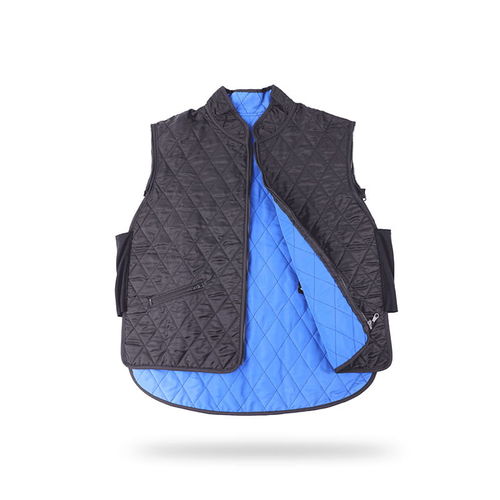
Key Features to Look for in a Cooling Vest
Once you have identified the right cooling technology for your situation, the following features determine how well a specific vest will perform and how practical it will be to use consistently:
- Coverage area: The more of the torso the vest covers — including the back, which is often under-covered in basic vest designs — the greater the cooling effect. A vest that covers only the front chest panel delivers meaningfully less cooling than one that wraps fully around the torso. For industrial and medical use, maximum coverage vests with both front and back cooling panels are strongly preferred.
- Fit and adjustability: A cooling vest must fit snugly enough that the cooling panels maintain consistent contact with the torso without shifting during movement. Loose-fitting vests leave air gaps that reduce thermal transfer. Look for adjustable side straps or closures, and check that the vest is available in a range of sizes — a medium-sized vest will provide inconsistent cooling on a large frame because the panels won't cover the torso adequately.
- Pack pocket design and retention: Cooling pack pockets should hold packs securely during physical activity without allowing them to shift, fall out, or create pressure points. Zippered or velcro-closure pockets with internal channels or guides that keep packs correctly positioned during movement are preferable to simple open-top pouches.
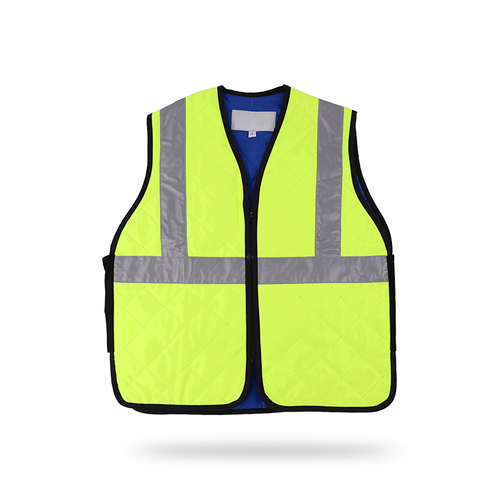
- Outer shell material and durability: Industrial vests need abrasion-resistant outer shells — typically ripstop nylon or polyester — that can withstand the rigors of a worksite environment. Medical and sports vests prioritize lightweight, breathable fabrics that minimize thermal resistance between the cooling pack and the skin. Reflective trim on industrial vests improves visibility in low-light work environments.
- Compatibility with PPE and uniforms: In occupational settings, the cooling vest must be wearable either under or over the required work uniform, high-visibility vest, body armor, or other PPE. Slim-profile vests with low-profile pockets are easier to wear under harnesses and hi-vis gear. Check vest thickness and weight specifically against the PPE configuration the wearer will be using.
- Washability and hygiene: In occupational and medical settings, vests need regular washing. Confirm that the vest shell (with packs removed) is machine washable and can withstand frequent laundering without degradation of fit, closures, or pocket integrity. PCM packs themselves are typically wipe-clean only and should not be submerged in water beyond the recharge protocol.
How to Use a Cooling Vest for Maximum Effectiveness
Even the best cooling vest will underperform if it is not used correctly. These guidelines apply across all vest types and help you get the maximum benefit from whatever cooling technology you choose:
- Pre-cool before the heat exposure begins: The greatest benefit from a cooling vest comes from starting the wear period with a lower-than-ambient core temperature. For athletes, this means wearing the vest for 15–30 minutes before warm-up in a cool environment. For workers, this means putting on a pre-charged vest before moving into the hot environment rather than waiting until you feel hot to put it on.
- Wear the vest directly against the skin or over a thin base layer: Every layer of clothing between the cooling pack and the skin reduces the rate of heat transfer. For maximum cooling, wear the vest directly against the skin. If that is not practical due to hygiene or comfort, a single thin moisture-wicking base layer is acceptable — thick cotton t-shirts significantly reduce cooling effectiveness.
- Have spare packs charged and ready: For work shifts longer than the vest's single-charge cooling duration, having pre-charged spare pack sets available allows the vest to be recharged quickly at break time without interrupting the cooling protocol. Most PCM vest manufacturers recommend purchasing at least two sets of packs per vest for this reason.
- Combine the vest with other heat management measures: A cooling vest is most effective as part of a broader heat management strategy that includes adequate hydration, scheduled rest breaks in shaded or air-conditioned areas, lightweight and breathable work clothing, and monitoring of environmental conditions (WBGT index). A vest alone does not eliminate heat stress risk in extreme conditions.
- Monitor the cooling pack temperature and replace promptly: Once PCM or ice packs have fully discharged, the vest provides no meaningful cooling and may even trap body heat if the pack has warmed above skin temperature. Train workers and athletes to recognize when packs need replacement and not to continue wearing a discharged vest in hot conditions under the assumption that it is still working.
What to Check When Buying a Cooling Vest
With a wide range of cooling vest products available at very different price points, knowing what separates a quality vest from an underperforming one saves you from costly disappointment. Here is what to verify before purchasing:
- Cooling capacity specification: Quality PCM vest manufacturers publish the cooling energy capacity of their vest in watt-hours or kilocalories — this tells you the actual amount of heat the vest can absorb, which directly determines how long it will cool effectively under real conditions. Vests without published cooling capacity data are difficult to compare meaningfully against alternatives.
- Phase change temperature for PCM vests: The 28°C phase change temperature is the most physiologically appropriate for general occupational and sports use — it keeps the cooling surface below skin temperature (around 33–34°C) without causing cold discomfort or vasoconstriction. The 14°C and 21°C phase change materials are used for pre-cooling and medical applications where more aggressive cooling is desired. Confirm which phase change temperature is in the product you are evaluating.
- Independent testing or clinical evidence: For medical applications (MS, spinal cord injury, other heat-sensitive conditions) and for occupational safety programs, look for cooling vests that have been independently tested or cited in peer-reviewed research. Several PCM vest brands have published clinical trial data supporting their cooling duration and physiological effectiveness claims.
- Pack replacement and long-term cost: PCM and ice packs degrade over repeated freeze-thaw cycles and will eventually need replacement. Check whether replacement packs are available from the manufacturer and at what cost — a vest with an attractive upfront price but expensive or hard-to-source replacement packs may be more expensive over three to five years of use than a better-specified competing product.
- Sizing and gender-specific fits: Many industrial cooling vests are designed around a standard male torso shape and perform poorly on workers with different body proportions. If vests are being procured for a mixed workforce, confirm that female-specific or adjustable-fit options are available, as a poorly fitting vest will not maintain panel contact and delivers substantially reduced cooling.
- Compliance with relevant standards: For occupational safety programs, check whether the cooling vest complies with relevant occupational health standards in your jurisdiction — in the EU, PPE Regulation 2016/425 applies to cooling garments classified as PPE; OSHA guidelines in the US cover heat illness prevention programs that specify the use of cooling equipment. For medical applications, check whether the product is listed as a medical device with relevant regulatory bodies if reimbursement through healthcare programs is intended.

 3rd Floor, East Gate, No. 2599 Park Road, Sheng Ze Town, Wu Jiang District, Suzhou City, Jiangsu Province
  +86- 0512-63519080
 +86-13584404311
  FQsales1@163.com