
 English
 简体中文
简体中文
Content
- 1 What Is a Cooling Hard Hat and How Does It Work?
- 2 Types of Cooling Hard Hats Available Today
- 3 Key Features to Look for in a Cooling Hard Hat
- 4 Cooling Hard Hat Comparison: Which Type Is Right for Your Job?
- 5
- 6
- 7 Who Needs a Cooling Hard Hat Most?
- 8 How to Add Cooling to Your Existing Hard Hat
- 9 Maintenance and Care Tips for Cooling Hard Hats
- 10 Top Brands Making Cooling Hard Hats Worth Considering
What Is a Cooling Hard Hat and How Does It Work?
A cooling hard hat is a safety helmet engineered to reduce heat buildup on the head while still meeting the impact protection standards required on construction sites, industrial facilities, and outdoor worksites. Standard hard hats are designed primarily for head protection against falling objects and electrical hazards — but they trap heat and restrict airflow, making them genuinely dangerous in hot environments where heat stress and heat stroke are real occupational risks. A cooling hard hat solves this by integrating one or more active or passive cooling mechanisms directly into the helmet's structure without compromising its protective function.
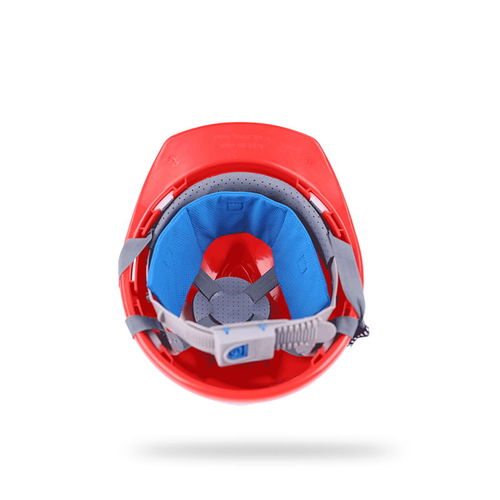
The core challenge in designing a hard hat with cooling capability is that the rigid outer shell necessary for impact protection naturally limits ventilation. Manufacturers have addressed this in several ways: by building ventilation channels and airflow slots into the shell, by incorporating phase-change material (PCM) inserts that absorb heat as they melt, by adding battery-powered fan systems inside the helmet, and by designing sweatbands and suspension systems from moisture-wicking materials that enhance evaporative cooling. Some advanced models combine multiple approaches to deliver meaningful temperature reduction at the head level throughout a full workshift.
Types of Cooling Hard Hats Available Today
Not all hard hats with cooling features work the same way. The method of cooling affects performance duration, cost, maintenance requirements, and suitability for different work environments. Here are the main categories you'll find on the market:
Vented Hard Hats with Passive Airflow
Vented hard hats are the simplest and most widely available form of cooling helmet. They feature a series of slots or holes cut into the outer shell that allow ambient air to circulate between the shell and the suspension harness, reducing heat accumulation inside the helmet. The cooling effect is entirely passive — it depends on air movement generated by the worker's motion or wind. Vented hard hats work reasonably well in outdoor environments with a breeze but provide minimal cooling in still-air conditions such as confined spaces or indoor industrial settings. It's important to note that vented hard hats are not suitable for electrical work environments, as the openings compromise the dielectric protection of the helmet.
Phase-Change Material (PCM) Cooling Hard Hats
PCM cooling hard hats use inserts filled with a phase-change material — typically a paraffin-based compound — that is designed to melt at a temperature just below body temperature (around 28–30°C). As the material transitions from solid to liquid, it absorbs a significant amount of latent heat from the surrounding area, keeping the inside of the helmet noticeably cooler. The cooling duration depends on the amount of PCM used and the ambient temperature, but most PCM hard hat inserts provide 2 to 4 hours of active cooling per charge. Recharging is done by placing the insert in a cooler or refrigerator until it re-solidifies. PCM inserts are available as retrofit accessories for many standard hard hat models as well as being integrated into purpose-built cooling helmets.
Fan-Assisted Cooling Hard Hats
Fan-cooled hard hats contain one or more small battery-powered fans built into the interior of the helmet that actively circulate air across the head. This forced-air circulation significantly increases the rate of evaporative cooling from sweat on the scalp, delivering a cooling effect even in still-air environments where passive ventilation is ineffective. Battery life varies by model, with most rechargeable fan hard hats running between 4 and 12 hours on a single charge. Some models allow the fan speed to be adjusted, balancing cooling intensity against battery runtime. Fan hard hats are heavier and require battery management, but they are among the most effective options for workers in extremely hot, low-airflow environments.
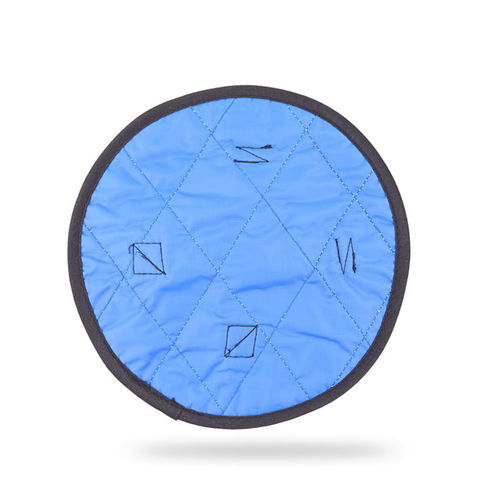
Evaporative Cooling Hard Hat Inserts and Liners
A practical and low-cost approach to hard hat cooling involves using evaporative cooling inserts, pads, or neck shade attachments that are soaked in water before use. As the water evaporates, it draws heat away from the head and neck. These accessories are compatible with most standard hard hat models and are particularly effective in hot, dry climates where evaporation rates are high. In humid environments, evaporative cooling is less effective because the air is already saturated with moisture. Water-activated cooling sweatbands made from superabsorbent polymer crystals are a popular variant that can be worn inside any hard hat.
Key Features to Look for in a Cooling Hard Hat
Shopping for a hard hat with cooling capability involves balancing safety compliance, comfort, durability, and the actual effectiveness of the cooling mechanism. The following features are the most important to evaluate before making a purchase:
- Safety Certification: Any hard hat — cooling or otherwise — must meet the relevant safety standards for your jurisdiction and work environment. In the United States, look for ANSI/ISEA Z89.1 certification. In Europe, EN 397 is the applicable standard. The helmet's class rating (Class E for electrical, Class G for general, Class C for conductive) determines its suitability for specific hazards. Never sacrifice certification compliance for cooling features.
- Cooling Duration and Recharge Time: For PCM and fan-based systems, understand how long the cooling effect lasts under typical working conditions and how long recharging takes. A PCM insert that provides 2 hours of cooling but takes 6 hours to refreeze is impractical for a full-day shift unless you have multiple inserts in rotation.
- Weight and Balance: Cooling components add weight to the helmet. Fan motors, batteries, and PCM inserts all contribute to a heavier helmet that can cause neck fatigue over a long shift. Check the total weight of the cooling hard hat against a standard model — ideally, the difference should be under 200 grams to remain comfortable for extended wear.
- Suspension System Quality: The internal harness and sweatband are critical comfort components that also affect the cooling air gap between the shell and the head. Look for 6-point or 8-point ratchet suspension systems with moisture-wicking or mesh sweatbands that improve both fit adjustment and ventilation.
- Compatibility with Accessories: Many worksites require additional attachments such as face shields, ear defenders, or lamp brackets. Ensure the cooling hard hat you choose has compatible attachment slots and that the cooling mechanism doesn't interfere with accessory mounting.
- Durability and Weather Resistance: For outdoor workers, the helmet must withstand UV exposure, rain, and temperature extremes. High-density polyethylene (HDPE) and ABS plastic shells offer good impact resistance and UV stability. If the cooling system includes electronic components, confirm their IP rating for moisture resistance.
Cooling Hard Hat Comparison: Which Type Is Right for Your Job?
Choosing the right type of cooling hard hat depends heavily on your specific work environment, the duration of heat exposure, and practical constraints like access to power for recharging. The table below summarizes how the main cooling approaches compare across the most relevant selection criteria:
| Feature | Vented Hard Hat | PCM Cooling Hat | Fan-Assisted Hat | Evaporative Insert |
| Cooling Effectiveness | Low–Moderate | Moderate–High | High | Moderate (dry climates) |
| Works in Still Air | No | Yes | Yes | Partially |
| Cooling Duration | Continuous | 2–4 hours | 4–12 hours | 1–3 hours |
| Recharge Method | None needed | Cooler/refrigerator | USB/wall charging | Re-soak in water |
| Electrical Safety Rated | No (Class C only) | Yes (model dependent) | No | Yes (insert only) |
| Cost Range | $15–$40 | $40–$120 | $60–$180 | $5–$25 |
Who Needs a Cooling Hard Hat Most?
While any worker in a hot environment can benefit from a hard hat designed to reduce heat stress, certain occupations and work settings make a cooling hard hat not just a comfort upgrade but a genuine safety necessity. Heat-related illness — including heat exhaustion and heat stroke — is one of the leading causes of occupational injury and death in outdoor and industrial work, and the head is a primary heat exchange point for the human body.
- Construction Workers: Outdoor construction sites in summer, particularly in southern states or tropical climates, routinely reach ambient temperatures where unprotected heat exposure becomes a medical risk within hours. Construction workers who must wear a hard hat throughout the shift have no option to remove it for cooling, making a ventilated or PCM-equipped cooling hard hat especially valuable.
- Roofing and Asphalt Workers: Workers on rooftops or laying asphalt face some of the most extreme heat exposures in any trade. Reflected heat from dark surfaces can raise the effective temperature by 10–20°C above ambient. A fan-assisted cooling hard hat or PCM insert can make a meaningful difference in comfort and safety for these workers.
- Steel Mill and Foundry Workers: Indoor industrial environments with high radiant heat loads from furnaces and molten metal require specialized heat protection. Workers in these settings need hard hats that comply with high-temperature exposure requirements while incorporating cooling features appropriate for radiant heat environments.
- Electrical Utility Workers: Linemen and utility workers often work in direct sun on elevated structures with minimal shade. Cooling hard hats rated for Class E electrical protection — which rules out vented models — are specifically engineered for this segment and are increasingly standard issue at major utilities.
- Agriculture and Landscaping Workers: Farm and landscape crews spend entire shifts in direct sunlight. While hard hats are not always mandatory in these settings, supervisors and equipment operators who are required to wear head protection benefit significantly from lightweight vented or evaporative cooling hard hats.
How to Add Cooling to Your Existing Hard Hat
If replacing your current hard hat is not immediately practical, there are several retrofit accessories that can add meaningful cooling performance to a standard safety helmet without requiring a new purchase. These solutions are cost-effective, widely available, and compatible with most common hard hat brands and models.
Cooling Sweatband Replacements
The standard foam or terry-cloth sweatband in most hard hats can be replaced with a cooling sweatband made from superabsorbent polymer crystals encased in a fabric sleeve. When soaked in water, these crystals absorb and hold a large volume of water, releasing it slowly through evaporation over several hours. They are inexpensive (typically $5–$15), reusable, and compatible with virtually any hard hat suspension system. In dry, hot conditions they provide a noticeable reduction in perceived head temperature and help keep sweat out of the eyes.
PCM Insert Packs
Several manufacturers sell PCM cooling inserts designed to fit into the crown area of a standard hard hat, typically between the outer shell and the suspension harness. These inserts require no modification to the helmet and can be swapped in and out in seconds. They are particularly useful for workers who have breaks during which the insert can be returned to a job-site cooler to refreeze. One commonly cited brand is the OccuNomix Miracool PCM insert, though multiple manufacturers offer compatible versions.
Neck Shade and Sun Shield Attachments
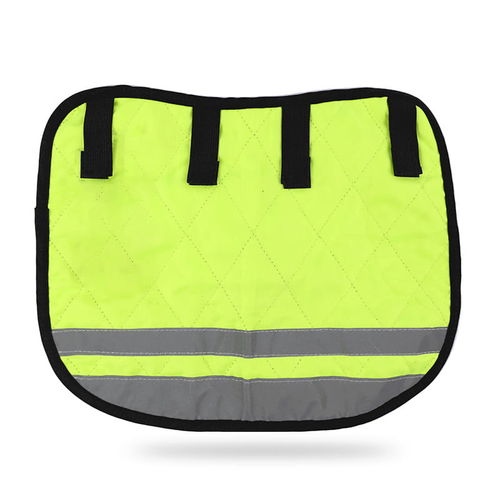
While not a direct head-cooling mechanism, clip-on neck shades and full brim hard hat sun shields significantly reduce the solar heat load on the head, neck, and face. By blocking direct sun from the sides and back of the helmet, these accessories reduce the radiant heat absorbed by the helmet shell, which in turn reduces the interior temperature. They attach to the brim of most standard hard hats without tools and can be made from UV-reflective fabrics for added effectiveness.
Maintenance and Care Tips for Cooling Hard Hats
Proper maintenance of a cooling hard hat is essential both for safety — a damaged shell may no longer meet impact protection standards — and for ensuring the cooling mechanism continues to perform effectively. Follow these best practices to extend the service life of your helmet and its cooling components:
- Inspect the Shell Regularly: Check the outer shell for cracks, dents, chalking (a sign of UV degradation), or deformation after any impact. A hard hat that has sustained a significant impact must be replaced immediately, even if damage is not visible to the naked eye. Most manufacturers recommend replacing hard hat shells every 2–5 years regardless of visible condition.
- Clean the Sweatband and Suspension: Sweat, dirt, and sunscreen residue build up on the suspension harness and sweatband over time, reducing both comfort and hygiene. Wash these components with mild soap and water weekly in hot weather. Replace the sweatband when it shows signs of wear or no longer absorbs moisture effectively.
- Store PCM Inserts Properly: When not in use, PCM inserts should be stored in a cool, dry place. Avoid leaving them in a hot vehicle, as temperatures inside a parked car in summer can exceed the PCM's melting point, partially discharging the cooling capacity before the workday begins. Transport inserts in a small insulated bag or cooler if possible.
- Charge Fan Batteries Overnight: For fan-assisted cooling hard hats, establish a habit of placing the helmet on charge at the end of every shift so it is fully charged and ready at the start of the next day. Check battery health periodically and replace batteries when runtime falls significantly below the manufacturer's specification.
- Avoid Painting or Applying Stickers to the Shell: Solvents in paints and adhesives can degrade the plastic shell material, reducing its impact resistance. Use only manufacturer-approved labels or decals if identification marking is required. Never drill holes in a hard hat shell to add accessories unless the modification is explicitly approved by the manufacturer.
Top Brands Making Cooling Hard Hats Worth Considering
The market for hard hats with cooling features has expanded considerably over the past decade, with both established safety equipment brands and newer specialized manufacturers offering purpose-built solutions. While product lines change regularly, the following brands have consistently produced well-regarded cooling hard hats across different price points and cooling technologies:
- MSA Safety: One of the oldest names in head protection, MSA offers the V-Gard series with vented shell options and compatible cooling accessories. Their hard hats are widely used in industrial and construction environments and carry full ANSI certification across multiple classes.
- Pyramex Safety: Pyramex offers several vented hard hat models with integrated cooling sweatbands and is known for competitive pricing without sacrificing ANSI compliance. Their Ridgeline and Ridgeline XR series are popular choices for construction and general industry.
- Honeywell (North Safety): Honeywell's North hard hat range includes vented models and accessories compatible with PCM inserts. Their high-end helmets are widely used in oil and gas, utilities, and electrical work where Class E ratings are mandatory.
- OccuNomix: OccuNomix specializes specifically in heat stress solutions and offers a well-regarded range of PCM cooling hard hat inserts and evaporative cooling accessories that are compatible with most major helmet brands. Their Miracool line is a recognized industry standard for retrofit cooling products.
- DEWALT and Klein Tools: Both brands have expanded into head protection with vented hard hats aimed at electricians and contractors who want the brand consistency of their tool suppliers. These helmets are well-built and increasingly available with cooling accessories through the brands' respective PPE ranges.


 3rd Floor, East Gate, No. 2599 Park Road, Sheng Ze Town, Wu Jiang District, Suzhou City, Jiangsu Province
  +86- 0512-63519080
 +86-13584404311
  FQsales1@163.com