
 English
 简体中文
简体中文
Content
- 1 How an Evaporative Cooling Vest Actually Works
- 2 The Humidity Problem: Where Evaporative Vests Work and Where They Don't
- 3 Evaporative Vest Materials: Polymer Crystals vs. Fabric-Based Designs
- 4 Evaporative Cooling Vest vs. Other Cooling Vest Types
- 5 Who Uses Evaporative Cooling Vests and Why
- 6 How to Wear and Use an Evaporative Cooling Vest Correctly
- 7 What to Look for When Buying an Evaporative Cooling Vest
How an Evaporative Cooling Vest Actually Works
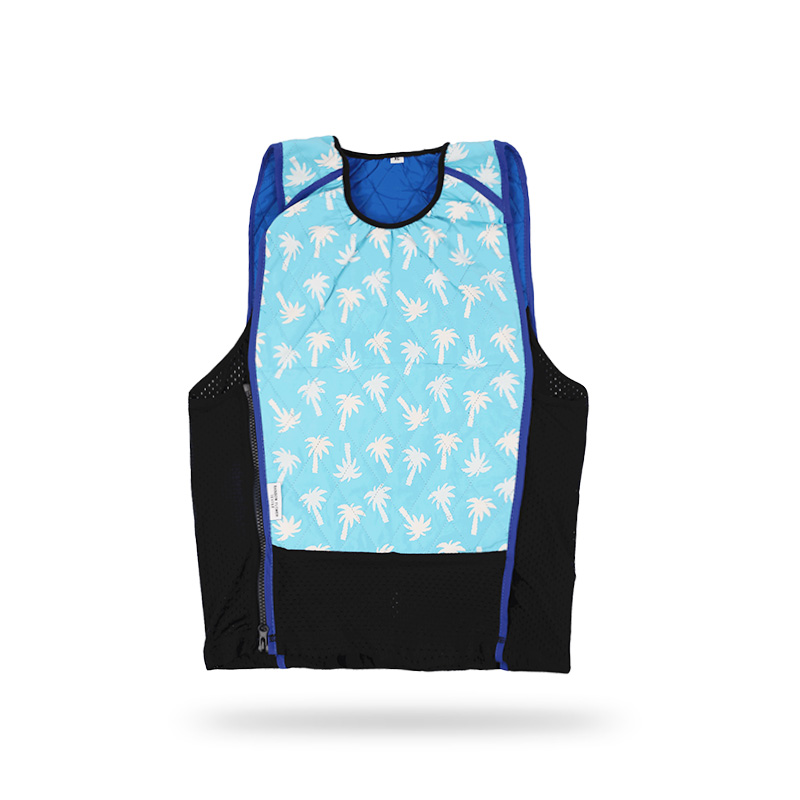
An evaporative cooling vest works on the same physical principle as sweating: when water converts from liquid to vapor, it absorbs heat from its surroundings in the process. A soaked vest holds water close to the body and releases it slowly through evaporation, drawing heat away from the torso and reducing the wearer's perceived temperature and core body temperature over time. The cooling effect is passive — no batteries, no freezer packs — which makes it one of the simplest and most portable heat management tools available.
The practical mechanics are straightforward. The vest is submerged in water for three to five minutes, then lightly wrung out or blot-dried to remove excess drip. As the wearer moves through warm air, the retained water in the vest material evaporates. This evaporation pulls heat from the vest surface — and by extension from the wearer's body — into the air. The process continues until the vest dries out, at which point it is simply re-soaked and the cooling cycle resumes. Because it is worn over other clothing in most configurations, solar heat also accelerates evaporation, making evaporative cooling vests particularly effective in sunny outdoor environments.
The internal architecture of a modern evaporative cooling vest is more engineered than it might appear. Most use either super-absorbent polymer crystals — the same type found in diapers, capable of absorbing hundreds of times their weight in water — or specialized cellulose-based or synthetic fabrics that hold and release water at a controlled rate. Research comparing four evaporative vest designs under controlled conditions found that cellulose-based vests achieved peak cooling capacities of up to 81.7 W at 40°C, with cooling capacity showing a strong correlation to the amount of water evaporated. This makes material selection and vest structure genuinely important engineering decisions, not just a matter of brand preference.
The Humidity Problem: Where Evaporative Vests Work and Where They Don't
The single most important fact about any evaporative cooling vest — and the one most often overlooked by first-time buyers — is that its effectiveness is directly governed by the relative humidity of the surrounding air. Evaporation can only happen when the air has capacity to accept water vapor. When ambient humidity is already high, that capacity is reduced, evaporation slows, and the vest's cooling output drops accordingly.
The practical threshold is well-established: evaporative vests perform extremely well in dry climates with relative humidity below 40%, deliver moderate performance between 40% and 70% relative humidity, and lose most of their functional cooling above 70% relative humidity — the point at which the air is approaching saturation and evaporation effectively stalls. In very dry, hot conditions the vest may last only 45 to 60 minutes before re-soaking is needed because evaporation is so rapid. In more moderate humidity, the same vest may deliver two to four hours of cooling from a single soak.
This humidity dependence is not a product flaw — it is a fundamental physical constraint. Understanding it upfront prevents the frustration of buying an evaporative vest for a humid Gulf Coast job site or a tropical outdoor event and finding it ineffective. For those environments, phase change material (PCM) vests or ice-insert vests are the reliable alternatives because their cooling mechanism — absorbing heat as a material melts — operates independently of ambient humidity.
| Relative Humidity | Evaporative Vest Performance | Recommendation |
|---|---|---|
| Below 40% | Excellent — maximum cooling output | Ideal choice; best value and lightest weight |
| 40% – 70% | Moderate — reduced but useful cooling | Viable for light-to-moderate heat exposure |
| Above 70% | Poor — evaporation largely stalls | Switch to PCM vest or ice-insert vest |
Evaporative Vest Materials: Polymer Crystals vs. Fabric-Based Designs
Not all evaporative cooling vests absorb and release water the same way. The material used to hold and evaporate water determines cooling intensity, duration, weight, drying speed, and how the vest feels against or over the body. Two primary material approaches dominate the commercial market.
Super-Absorbent Polymer Crystal Vests
Polymer-based evaporative vests contain pockets or chambers filled with super-absorbent polymer crystals (SAPs) — the same hydrogel technology used in agricultural water retention products. Dry, the crystals are a fine powder or small granules. After soaking, they expand dramatically into a gel that can hold hundreds of times the dry weight in water. This stored water then releases slowly through evaporation across the surface of the vest. Polymer crystal vests tend to have a longer cooling duration per soak — often four to eight hours — because the gel matrix releases water gradually rather than all at once. The trade-off is added weight once soaked: a vest that weighs under 300 grams dry can weigh over a kilogram when fully hydrated. They are also somewhat visible in profile due to the expanded gel pockets. Research comparing polymer-based punched designs (ECVPP) found these performed well at moderate temperatures (around 30°C), with a peak cooling capacity near 78.5 W under good airflow conditions.
Cellulose and Fabric-Based Evaporative Vests
Fabric-based evaporative vests use engineered cellulose or synthetic wicking textiles that absorb water into their fiber structure and release it more rapidly through evaporation. These vests feel more like conventional garments, are lighter when soaked than polymer vests, and dry faster — both advantages for active wearers who need to move freely. The faster evaporation rate means higher instantaneous cooling power in hot conditions, but shorter duration per soak: re-soaking may be needed every one to two hours in very hot environments. Research confirmed that cellulose-based vests (ECVCB) achieved the highest peak cooling capacity of tested designs at 40°C high-heat conditions, reaching 81.7 W, outperforming polymer alternatives in truly hot conditions. For workers in extreme heat with reliable water access nearby, the higher cooling power of a well-designed fabric vest is often worth the more frequent re-soak.
Hybrid Evaporative-Fan Vests
A newer category combines evaporative cooling material with small battery-powered fans integrated into the vest body. The fans accelerate airflow across the wet fabric surface, dramatically increasing the evaporation rate and the resulting cooling power — particularly in low-airflow environments where a passive evaporative vest would otherwise underperform. Research on evaporative-fan cooling vests (EFCVs) using anti-mildew treated super-absorbent polymers confirmed that forced convection enhances both sensible heat transfer and evaporative latent heat exchange, addressing one of the main limitations of passive evaporative designs in still-air environments. The trade-off is the added weight and bulk of the fans and battery pack, and the need to keep the battery charged. These hybrid systems are particularly relevant for workers in confined spaces — warehouses, tunnels, machine rooms — where ambient airflow is minimal.
Evaporative Cooling Vest vs. Other Cooling Vest Types
An evaporative cooling vest is one of four main cooling vest technologies in the commercial market. Each has a distinct mechanism and a distinct best-use profile. Choosing the wrong type for the environment produces a vest that either underperforms or is more complicated to maintain than the situation warrants.
- Evaporative cooling vests — soaked in water, cooled by evaporation. Lightest weight, lowest cost, no freezer or electricity required. Best in dry climates with airflow. Largely ineffective above 70% relative humidity. Re-soak takes under a minute with water access. Cooling duration: 45 minutes to 4 hours depending on heat and humidity conditions.
- Ice or gel-pack insert vests — frozen packs sit in vest pockets against the torso. High initial cooling intensity. Work in any humidity. Heavy when loaded. Require a freezer and pre-freeze time (typically 2–4 hours). Cooling duration: 1–3 hours before packs warm and need replacement. Best for high-exertion, short-duration activities with freezer access nearby.
- Phase change material (PCM) vests — packs contain a material that melts at a fixed temperature (typically 14°C to 18°C / 57°F to 65°F), absorbing heat as it transitions from solid to liquid. Lighter than ice vests, no cold discomfort on skin contact. Humidity-independent cooling. Duration: 2–4 hours per charge. Require refrigerator or cooler to re-solidify. Preferred for industrial occupational heat stress and long-duration use.
- Battery-powered active cooling vests — use fans or thermoelectric modules to actively circulate cool air across the body. Work in any climate. Operate 4–8 hours per charge. Heavier than passive vests. Best for enclosed environments with no airflow where evaporative vests are ineffective.
For buyers in consistently dry climates — arid western US regions, Middle Eastern construction sites, desert agriculture — the evaporative vest is almost always the best starting point: it is the lightest, cheapest, simplest to operate, and requires no infrastructure. For buyers in mixed or humid climates, an evaporative vest may still be worth keeping for cooler or drier days, while a PCM vest handles the more demanding humid conditions.
Who Uses Evaporative Cooling Vests and Why
Evaporative cooling vests are used across a wide range of occupational and recreational contexts wherever heat stress is a real risk and a simple, low-maintenance solution is needed. The common thread is environments where carrying refrigerated packs or powered equipment is impractical.
Construction, Agriculture, and Outdoor Labor
Heat stress is a recognized occupational hazard in outdoor trades — construction, roofing, landscaping, road work, and agricultural field labor. Workers in these sectors face high physical workloads, solar radiation, and often limited shade, all of which compound ambient heat exposure. An evaporative cooling vest requires no power source and can be re-soaked from any available water source — a cooler, a tap, or a hose — making it a practical option for job sites in dry regions where access to electricity or a freezer cannot be assumed. The vest is lightweight enough to wear over a work shirt without significantly restricting movement or adding fatigue-inducing weight.
Industrial and Manufacturing Environments
Workers in foundries, steel mills, glass plants, bakeries, and commercial kitchens face radiant heat loads well above ambient air temperature. In dry industrial environments with ventilation systems moving air through the workspace, evaporative cooling vests can be effective. In hot, humid environments with poor ventilation — common in some manufacturing and food processing settings — a PCM vest is typically more appropriate. Many industrial safety programs provide cooling vests as part of a broader heat stress management plan that includes hydration schedules, work-rest rotation, and shaded rest areas.
Athletes and Outdoor Sports
Runners, cyclists, triathletes, and outdoor sporting event participants use evaporative cooling vests for pre-cooling before competition and between efforts in multi-stage events. The lightweight design allows the vest to be worn during warm-up periods and discarded at the start line. Research on pre-cooling with evaporative vests before exercise in heat shows meaningful reductions in cardiovascular strain and perceived exertion, extending time to exhaustion in hot conditions. For events held in dry climates — desert trail races, hot-weather road events — evaporative vests are a practical choice because they can be re-wetted at aid stations without any refrigeration logistics.
People with Heat-Sensitive Medical Conditions
Individuals with multiple sclerosis (MS), heat exhaustion sensitivity (EHS), POTS (postural orthostatic tachycardia syndrome), and other conditions where core body temperature regulation is compromised use cooling vests as a management tool. For MS patients in particular, elevated core body temperature worsens neurological symptoms — a phenomenon known as Uhthoff's phenomenon — and cooling vests are a clinically recognized tool for symptom management. Evaporative vests in this context are valued for their light weight and ease of use in daily activities; however, anyone using a cooling vest for medical management should confirm the appropriate type with their healthcare provider, as the humidity-dependent nature of evaporative vests may make a PCM alternative more reliable in some climates.
Spectators and Event Staff
Music festivals, outdoor sporting events, and large public gatherings in summer heat see significant demand for personal cooling. Evaporative cooling vests are popular among event staff, security personnel, and spectators because they require no equipment beyond a water source and provide meaningful comfort in the dry-to-moderate conditions common at summer outdoor venues. Re-soaking is fast — under a minute — and easy at any venue with water points.
How to Wear and Use an Evaporative Cooling Vest Correctly
Getting the full benefit from an evaporative vest requires using it correctly. Several common errors significantly reduce cooling effectiveness without any obvious sign that the vest is underperforming.
- Wear it on the outside of clothing. An evaporative vest must be exposed to airflow and sunlight to evaporate effectively. Worn under a jacket or tucked under a shirt, it cannot evaporate and delivers no cooling. The vest goes on top — over a T-shirt, work shirt, or athletic layer.
- Soak thoroughly and wring out excess drip. The vest should be fully submerged for three to five minutes to allow the polymer crystals or fabric to absorb maximum water. After soaking, a light wring removes the excess free water that would drip onto the wearer rather than evaporate from the vest surface. Blot-drying with a towel works for polymer vests that should not be aggressively wrung.
- Work with airflow, not against it. Evaporation is driven by air movement across the vest surface. In still air, even a dry-climate evaporative vest loses significant cooling output. Position yourself in available airflow, use a fan if working in an enclosed space, or consider a hybrid fan-evaporative vest for low-airflow environments.
- Re-soak before it is completely dry, not after. Cooling output drops as the vest approaches dryness. For sustained protection, re-soak when the vest feels significantly drier and before it is fully dry — this maintains continuous coverage rather than allowing a gap in cooling when the vest is fully dry and waiting to be re-soaked.
- Store damp vests properly between uses. Polymer crystal vests left wet in a sealed bag will develop mildew. If the vest will not be used for more than a day or two, allow it to dry fully before storage. Some fabric-based and polymer vests include anti-mildew treatments that extend the safe wet-storage window.
- Combine with hydration. An evaporative vest reduces external heat load but does not replace the need for adequate fluid intake. Heat stress management always requires hydration alongside any cooling equipment. In demanding conditions, the two work together — a well-hydrated body sweats efficiently, and a vest on top keeps the external microclimate cool.
What to Look for When Buying an Evaporative Cooling Vest
The market for evaporative cooling vests spans from simple soakable fabric panels under $30 to engineered multi-panel polymer vests in the $80 to $200 range and hybrid fan-evaporative systems above $200. The features that separate an effective vest from a disappointing one come down to a handful of specific specifications.
Material and Absorption Capacity
Specify whether the vest uses polymer crystals or fabric absorption. Polymer crystal vests offer longer duration per soak and are better for situations where re-soaking is infrequent. Fabric-based vests offer higher peak cooling and faster re-soak for situations where water access is reliable. Check the manufacturer's stated absorption capacity and cooling duration — and treat duration claims made in laboratory dry-heat conditions as an upper bound, not a guaranteed field performance figure in your specific climate.
Coverage Area
More vest coverage means more evaporation surface and more cooling power. Vests that cover the full front and back torso provide substantially more cooling than those covering only the upper back or chest panels. For occupational heat stress management, where sustained core temperature reduction across a full work shift is the goal, full-coverage designs are significantly more effective than partial-coverage alternatives.
Fit, Adjustability, and Range of Motion
An evaporative cooling vest must fit well enough to stay in position during active work or movement. Look for side adjustment straps or hook-and-loop closure systems that allow the vest to be sized for the individual wearer. A vest that is too loose slides off the torso and exposes the body to gaps in coverage; one that is too tight restricts breathing and movement. Vests intended for physically active use should have minimal material at the shoulders and armpits to avoid chafing and restriction.
Durability and Washability
Occupational-use vests are exposed to sweat, sunscreen, dust, and repeated soaking cycles. The outer fabric should be durable enough to withstand daily use over a full summer season without seam failures or crystal leakage from polymer pockets. Check whether the vest can be machine washed — many polymer crystal vests are hand-wash only, which is practical for individual use but inconvenient for workplaces issuing vests to multiple employees. Anti-mildew treatment on the inner fabric is a useful feature for vests that will be re-soaked repeatedly and stored damp between shifts.
Certification and Compliance
For occupational use, particularly in regulated industries or workplaces where PPE requirements apply, confirm that the vest meets the relevant safety standards for your market. Vests used as heat stress PPE in construction or industrial settings may be subject to employer purchasing requirements that specify minimum cooling duration, ANSI compliance for high-visibility workwear when combined with safety vests, or OSHA heat stress program documentation. For medical users, vests should comply with relevant product safety standards and ideally come with documentation of the materials used for confirmation with a healthcare provider.


 3rd Floor, East Gate, No. 2599 Park Road, Sheng Ze Town, Wu Jiang District, Suzhou City, Jiangsu Province
  +86- 0512-63519080
 +86-13584404311
  FQsales1@163.com