
 English
 简体中文
简体中文
Content
Why the Right Sports Vest Makes a Difference
A men's sports vest might seem like a straightforward purchase, but the wrong choice shows up quickly during a workout. A vest that traps heat during a long run, restricts shoulder movement during a lifting session, or loses its shape after a few washes creates friction — literally or figuratively — that gets in the way of training. The right men's athletic vest, on the other hand, disappears into the background: you stop noticing it after the first few minutes because it moves with you, manages sweat efficiently, and stays comfortable from warmup to cool-down.
The market for men's training vests has expanded significantly over the past decade. There are now purpose-built options for running, gym training, team sports, yoga, combat sports, and outdoor activity — each with different fabric constructions, fit profiles, and functional details. Understanding what separates them makes it easier to find a vest that genuinely suits how and where you train, rather than defaulting to whatever happens to be on sale.
Fabric Types and What They Mean for Performance
The fabric is the most important variable in any men's sports vest. It determines how the garment handles sweat, how it feels against the skin during sustained activity, how it holds up to repeated washing, and how it performs across different temperature conditions. Most performance vests use synthetic fabrics, but the specific construction varies widely and the differences are meaningful.
Polyester
Polyester is the most widely used fabric in men's gym vests and running vests. It is lightweight, durable, and inherently moisture-wicking — it pulls sweat away from the skin and disperses it across the fabric surface where it evaporates quickly. Standard polyester dries fast, holds its shape well after repeated washing, and is resistant to shrinking. The main limitation is that basic polyester can retain odor over time, particularly in high-sweat training environments. Better-quality polyester vests address this with anti-odor treatments or by blending in other fibers.
Polyester-Elastane Blends
Adding elastane (also sold as Lycra or spandex) to a polyester base gives the fabric four-way stretch, which significantly improves freedom of movement and helps the vest conform to the body without bunching or riding up during dynamic activity. Most fitted men's sports vests use a polyester-elastane blend in the range of 85–92% polyester and 8–15% elastane. This construction is particularly common in gym training vests designed for weightlifting, CrossFit, and high-intensity interval training, where the range of motion demands are high and a vest that stays in place matters.
Nylon
Nylon is softer and smoother than polyester and offers better abrasion resistance, making it a preferred fabric for men's athletic vests intended for activities where skin contact with surfaces is likely — such as wrestling, martial arts training, or outdoor sports with rough terrain. Nylon also has good moisture management properties, though it dries slightly more slowly than polyester. It tends to cost more, which is why it appears more often in premium performance vests than in budget options.
Merino Wool Blends
Merino wool is less common in sports vests but worth knowing about for outdoor training, trail running, or any activity where temperature regulation across variable conditions matters more than pure moisture evacuation speed. Merino naturally regulates body temperature, resists odor significantly better than synthetic fabrics, and feels soft against the skin even when wet. The tradeoffs are higher cost, lower durability compared to polyester, and slower drying time. Merino-blend vests — typically combining merino with polyester or nylon — balance these properties better than pure merino.
Cotton and Cotton Blends
Pure cotton vests are not recommended for serious training. Cotton absorbs moisture but does not wick it away — it holds sweat against the skin, becomes heavy and uncomfortable during sustained activity, and takes a long time to dry. Cotton-polyester blends improve on this but still lag behind performance synthetics for moisture management. Where cotton vests make sense is in low-intensity activity, casual gym use, or as everyday wear where comfort and softness matter more than technical performance.
Fit Styles: Compression, Fitted, and Relaxed
Men's sports vests come in three broad fit profiles, and the right one depends on the type of training and personal preference. Each has distinct functional characteristics beyond just how it looks.
| Fit Style | How It Feels | Best For | Watch Out For |
| Compression | Tight, second-skin fit with firm muscle support | Running, cycling, high-intensity training | Can feel restrictive if sized incorrectly |
| Fitted / Athletic | Close to the body but not tight; follows the shape without compressing | Gym training, team sports, general fitness | Sizing varies significantly between brands |
| Relaxed / Loose | Roomier fit with more air circulation | Basketball, martial arts, yoga, casual training | Can snag on equipment or ride up in dynamic movements |
Compression vests are worth considering for endurance sports where muscle support and reduced fatigue over long efforts matter. Research on compression garments suggests modest benefits for sustained aerobic activity and post-exercise recovery, though the effect size is small enough that comfort and personal preference should carry most of the decision. If a compression vest feels uncomfortable from the start, it won't deliver any benefit — and you won't wear it.
Sport-Specific Features to Look For
The best men's training vest for one activity is often a poor choice for another. Purpose-built design details make a meaningful difference in how a vest performs in its intended context.
Running Vests
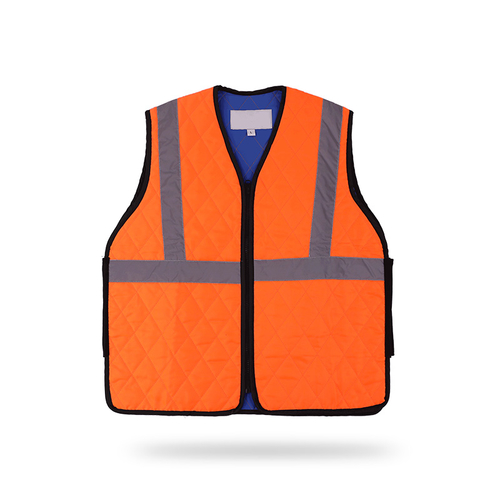
Men's running vests prioritize lightweight construction, minimal seams in high-contact zones, and highly breathable fabric panels under the arms and across the back. Flatlock stitching — where seam allowances lie flat rather than protruding — is important for longer runs where repeated arm movement can cause seam chafing across the shoulder and underarm. Reflective detailing on the back or sides adds visibility for low-light running without adding weight. Avoid running in a vest with large armhole cutouts that allow the vest to ride against the nipple area during longer distances — this is a common source of discomfort that is easy to overlook during a short trial in a changing room.
Gym and Weightlifting Vests
Men's gym vests need unrestricted shoulder and arm movement above all else. Wide or deep armhole cuts that allow full overhead range of motion without the vest pulling across the chest or back are the defining feature of a good lifting vest. Four-way stretch fabric helps with this, but the armhole geometry matters independently of fabric stretch. A vest that rides up during deadlifts or pulls across the upper back during pull-ups is a consistent distraction. Look for reinforced side seams if you train with a weightlifting belt, as standard seams can wear quickly under repeated belt contact.
Team Sports Vests
Football, basketball, rugby, and similar team sport training vests are often looser in fit and more durable in construction to handle physical contact, grabbing, and the abrasion of outdoor surfaces. Many team training vests include mesh panels across the back or sides for ventilation during high-intensity intervals. Number printing or team color availability is relevant for clubs and organized teams. For contact sports, avoid vests with external hardware — zip pulls, decorative buttons, or exposed labels — that can catch on opponents or cause abrasion during tackles.
Outdoor and Trail Training Vests
For outdoor training in variable weather, a men's athletic vest used as a base or mid layer benefits from temperature-regulating fabric, UV protection rating (UPF 30 or above for exposed skin in sunny conditions), and a construction that works under a jacket without bunching. If trail running or hiking in warm weather, a vest with integrated sun protection reduces the need for sunscreen on the shoulders and upper back — a practical benefit for multi-hour outdoor sessions.
Sizing and How to Get It Right
Sizing inconsistency is one of the most common frustrations when buying men's sports vests, particularly online. A medium in one brand fits like a large in another, and the way a vest is cut — whether it is designed for a broader athletic build or a leaner running physique — affects how it fits even at the same nominal size.
- Always check the brand's specific size chart rather than assuming your usual size will translate. The most useful measurements are chest circumference and torso length. Most brands publish these for each size, and comparing them against your own measurements takes less than two minutes and avoids the majority of sizing errors.
- Consider your shoulder width when choosing between fitted and relaxed cuts. Men with broader shoulders relative to their chest often find that the armhole position on fitted vests cuts into the shoulder rather than sitting cleanly below it. If this is a recurring issue, look for brands that design specifically for athletic builds or try a size up in the shoulder-heavy styles.
- Check the vest length if you plan to tuck it in or if you train in movements where a short vest will expose your midriff — overhead pressing, for example. Length specifications are less consistently published than chest measurements but are worth checking if this matters for your training style.
- For compression vests, size down only if the size chart supports it. The common advice to size down in compression garments is not universally applicable — it depends on how the brand grades its compression. An oversized compression vest provides no compression benefit; an undersized one restricts breathing and blood flow. Follow the brand's guidance and prioritize a snug-but-comfortable fit over a tight one.
Care and Durability: Making Your Vests Last
Performance sports vests degrade faster than most people expect when they are washed incorrectly. The technical fabric treatments — moisture-wicking finishes, anti-odor treatments, UV coatings — are the first things to break down under high-heat washing and tumble drying. A few straightforward habits extend the functional life of a men's training vest significantly.
- Wash at 30°C or lower using a sports-specific or gentle detergent. High-temperature washing breaks down elastane fibers, causing the vest to lose its stretch and shape retention over time. It also degrades moisture-wicking and anti-odor treatments faster than low-temperature washing.
- Avoid fabric softener entirely. Fabric softener coats the fibers of technical fabrics and blocks the microscopic pore structure that allows moisture wicking to work. A vest washed repeatedly with softener will feel softer but will stop managing sweat effectively within a few months.
- Air dry rather than tumble dry. Tumble dryer heat degrades elastane and technical coatings faster than almost anything else. Hanging vests to dry at room temperature adds a few hours to the process but significantly extends the functional life of the garment.
- Wash after every use if the vest was worn in a high-sweat session. Leaving sweat to dry in the fabric repeatedly without washing causes odor-causing bacteria to build up in the fibers, leading to permanent odor retention that no amount of washing will fully eliminate.
- Turn vests inside out before washing to protect printed graphics and external surface treatments, and to ensure the inner surface — which carries the highest sweat load — gets the most direct washing action.
What to Expect at Different Price Points
Men's sports vests span a wide price range, and while higher price does not always mean better performance, there are real differences in what different budget levels typically deliver. Understanding the trade-offs helps in setting realistic expectations and making a purchase that represents good value for the way you actually train.
| Price Range | What You Typically Get | Limitations |
| Under £10 / $12 | Basic polyester construction, functional for casual gym use | Limited durability, basic seam construction, minimal stretch |
| £10–£25 / $12–$30 | Polyester-elastane blend, decent moisture wicking, better fit options | Anti-odor treatments may fade quickly; inconsistent sizing |
| £25–£50 / $30–$60 | Purpose-built designs, flatlock seams, reliable technical performance | Brand premium starts to factor into price at the upper end |
| £50+ / $60+ | Premium fabrics, advanced textile technologies, sport-specific engineering | Diminishing performance returns; significant portion is brand value |
For most training contexts, the £15–£35 range delivers the best balance of technical performance and durability. Spending more than this buys marginal performance improvements and brand cachet rather than a fundamentally better vest. Where premium vests do justify their cost is in high-mileage running or endurance sports where seam construction, fabric weight, and chafe resistance are tested over hours of continuous use rather than a forty-five minute gym session.



 3rd Floor, East Gate, No. 2599 Park Road, Sheng Ze Town, Wu Jiang District, Suzhou City, Jiangsu Province
  +86- 0512-63519080
 +86-13584404311
  FQsales1@163.com