
 English
 简体中文
简体中文
Anyone who has spent a summer afternoon on a construction site, in a loading bay, or on an airport apron knows how the day really goes. The work does not slow down first, the person does. A cooling waistcoat is one of the simplest pieces of equipment that changes that equation, because it puts a controlled layer of cooling against the torso, where the body releases heat fastest and where a small amount of relief makes the largest difference.
Wujiang Fangqi Textile Co., Ltd. makes exactly this kind of gear. We are based in Shengze, in Jiangsu Province, a town the local industry describes as one of China's best known textile centres, and we produce cooling vests, cooling waistcoats, cooling scarves and wrist wraps, headbands, hard hat pads and cold weather clothing in a 4,000 square metre factory with around 100 employees. Our products ship to more than 30 countries across Europe, North America, Australia and Southeast Asia, and a large share of them reach shoppers through Amazon sellers and other e-commerce brands.
This guide is written for buyers rather than for end users: the sourcing managers, product developers and brand owners who need to pick a cooling waistcoat that survives a real season of use and still sells well the following summer.
Content
- 1 What Makes a Waistcoat a Cooling Waistcoat?
- 2 How Cooling Waistcoats Work: Four Technologies Compared
- 3 Matching the Cooling Waistcoat to the Job
- 4 A Sourcing Checklist for Cooling Waistcoats
- 5 Fabric, Fit and Comfort Details That Decide Repeat Orders
- 6 Customization, Branding and Private Label
- 7 Quality Control, Lead Times and Shipping
- 8 Staying Cool Is a Specification, Not a Slogan
What Makes a Waistcoat a Cooling Waistcoat?
A cooling waistcoat is a sleeveless, torso-focused garment that removes heat from the body faster than ordinary workwear can. The waistcoat form matters. Unlike a full cooling jacket, it leaves the arms completely free, so the wearer keeps full range of motion, and it uses less fabric that could otherwise trap humid air against the skin.
There are two broad families. Passive cooling waistcoats rely on fabric construction, using moisture-wicking yarns, mesh panels and quick-dry blends to speed up natural sweat evaporation. Active cooling waistcoats add a cooling medium: water, frozen gel packs, phase change material, or moving air from small battery-powered fans. Most of the waistcoats we manufacture for overseas buyers fall into the active category, because buyers usually want a cooling effect they can measure and describe on a product page.
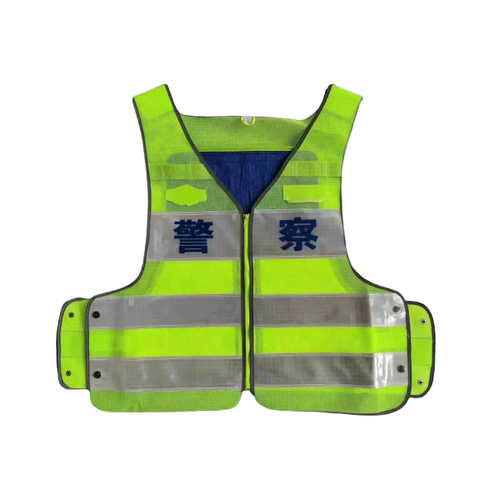
It also helps to separate a cooling waistcoat from a reflective safety vest early in the process. A reflective vest is about being seen. A cooling waistcoat is about staying functional in heat. Plenty of our styles do both jobs at once, and that combination moves fastest for customers selling into construction, traffic control and municipal work.
How Cooling Waistcoats Work: Four Technologies Compared
Almost every cooling waistcoat on the market uses one of four mechanisms, or a combination of them. The choice drives unit cost, garment weight, cooling duration and washing instructions, which is why it is usually the first decision a buyer should make.
| Technology | How It Cools | Typical Cooling Window | Best Suited To |
|---|---|---|---|
| Evaporative | Fabric is soaked in water; heat leaves the surface as the water evaporates | 3 to 8 hours, depending on humidity and airflow | Hot dry climates, outdoor labour, sport and personal use |
| PCM or gel ice packs | Pre-frozen packs sit in pockets and absorb body heat directly | 1.5 to 4 hours per set of packs | Foundries, industrial kitchens, enclosed spaces needing an instant chill |
| Fan-assisted | Small battery fans draw outside air through the garment and across the skin | As long as the battery lasts, often 6 to 12 hours | Humid regions, warehouses, long shifts, air-conditioned clothing lines |
| Reflective cooling waistcoat | Cooling core combined with high-visibility reflective tape | Depends on the cooling core inside | Roadworks, traffic control, night shifts and roadside crews |
Humidity is the variable that catches buyers out most often. An evaporative waistcoat that performs beautifully in a dry climate may feel almost useless in a humid one, while a fan-assisted or ice-pack design behaves far more consistently. Matching the mechanism to the climate you sell into is more important than chasing the lowest unit price.
Matching the Cooling Waistcoat to the Job
Different worksites reject a waistcoat for different reasons. Road crews destroy fabric on kerbs and barriers, warehouse staff complain about bulk, and security teams want pockets and a low-profile look. Mapping the product to the workplace before sampling saves a lot of back and forth.
- Outdoor construction and roadworks: reflective tape, abrasion-resistant shell, lime or orange colourways that meet visibility expectations.
- Warehousing and logistics: lighter, less conspicuous designs, where fan-assisted waistcoats often win because indoor air is humid and still.
- Police, security and event staff: darker, slimmer waistcoats with pockets for radios, notebooks and credentials.
- Sport and personal use: thin stretch fabrics, small packs, and colourways that photograph well for e-commerce listings.
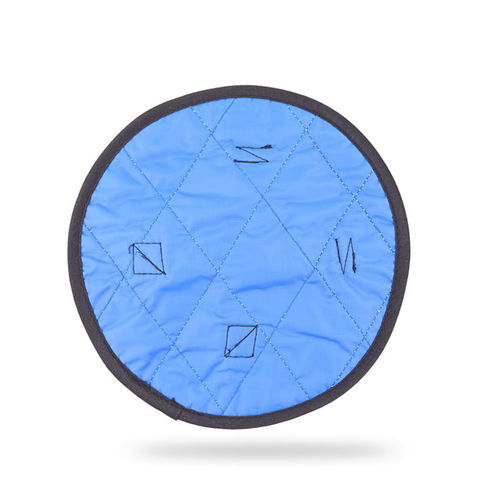
- Hard hat environments: waistcoats are usually paired with a cooling neck shade or helmet pad rather than worn over the helmet itself.
If you want a closer look at how one traffic-facing design performs in practice, our article on the benefits of the lime traffic cooling waistcoat walks through the details of materials and tape placement.
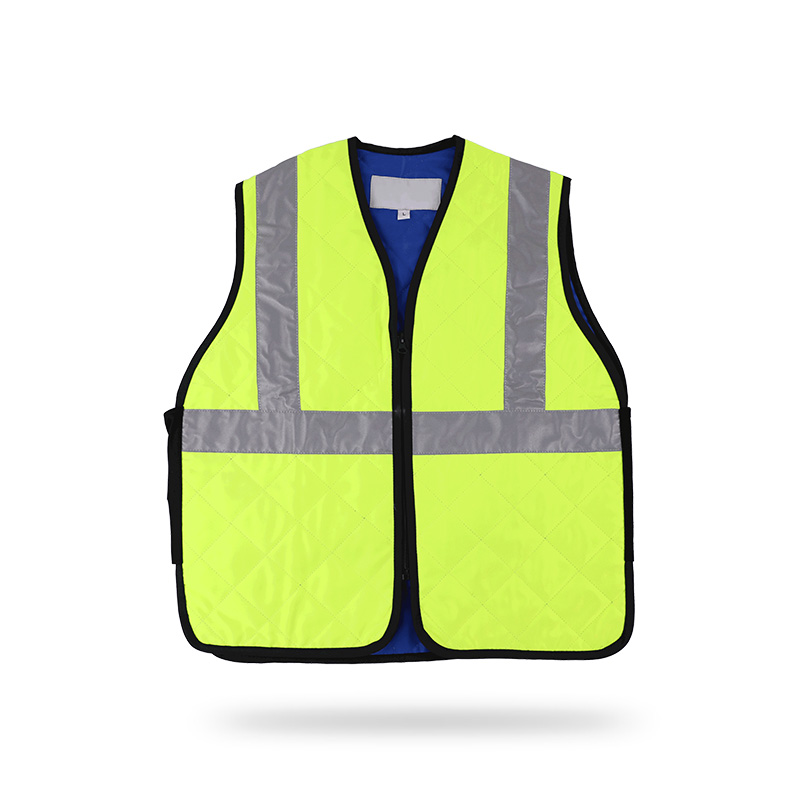 Lime Traffic Cooling Waistcoat (FQ-2013)Traffic Safety Vest Hook and loop front closure Polyester exterior with fabric interior, and water repellent nylon liner A plurality of reflective strips before and af...View Product →
A Sourcing Checklist for Cooling Waistcoats
Once the mechanism and the worksite are clear, the rest of the specification tends to fall into place. The points below are the ones that most often decide whether a first order turns into a repeat order.
- Fix the cooling mechanism first, because it determines price, weight, washing method and packaging.
- Test cooling duration claims against the climate your customers actually work in.
- Check fabric weight and hand feel, since a waistcoat that feels stiff will not be worn under a work shirt.
- Confirm how the garment is cleaned, and whether the cooling core is removable before washing.
- Ask about size grading and fit tolerance, especially for unisex styles sold across several markets.
- Verify the reflective tape specification if high visibility is part of your marketing claim.
- Request a sample set across at least two sizes before committing to bulk production.
For buyers sourcing labour protection and heat relief programmes, the outdoor work category is usually the entry point, since it combines durability with the clearest return on investment for the employer.
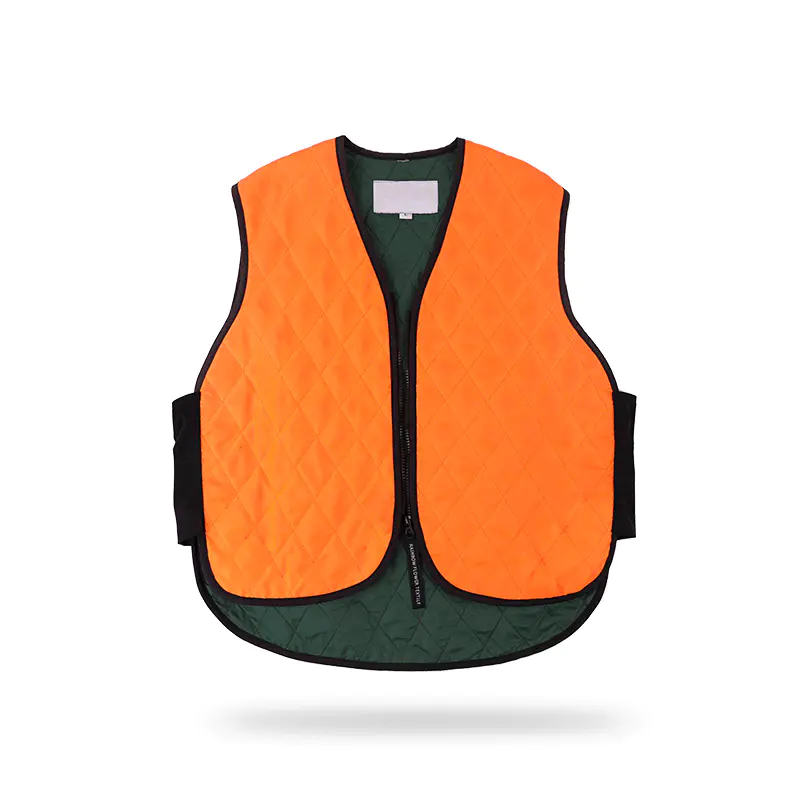 Cooling Vest for Outdoor Work(FQ-2003)Your contact detailsView Product →
Fabric, Fit and Comfort Details That Decide Repeat Orders
Fabric and construction
The outer shell, the mesh lining and the pocket system all affect how the garment behaves after twenty washes. Quick-dry blends and open mesh linings dry faster and reduce odour, while reinforced stitching at the shoulders and pocket edges keeps ice pack sleeves from tearing. Zippers and hook-and-loop closures should be rated for repeated opening, because that is where most returns originate.
Fit and sizing
Cooling waistcoats are normally worn as an outer layer over a light shirt or as a base layer in hot conditions. A fit that is too tight presses the cooling elements into the skin and feels uncomfortable within minutes, while a fit that is too loose lets the garment shift when the wearer bends or reaches. Adjustable side straps solve most of that problem across a broad size range, which matters for buyers who want to hold fewer SKUs without losing coverage.
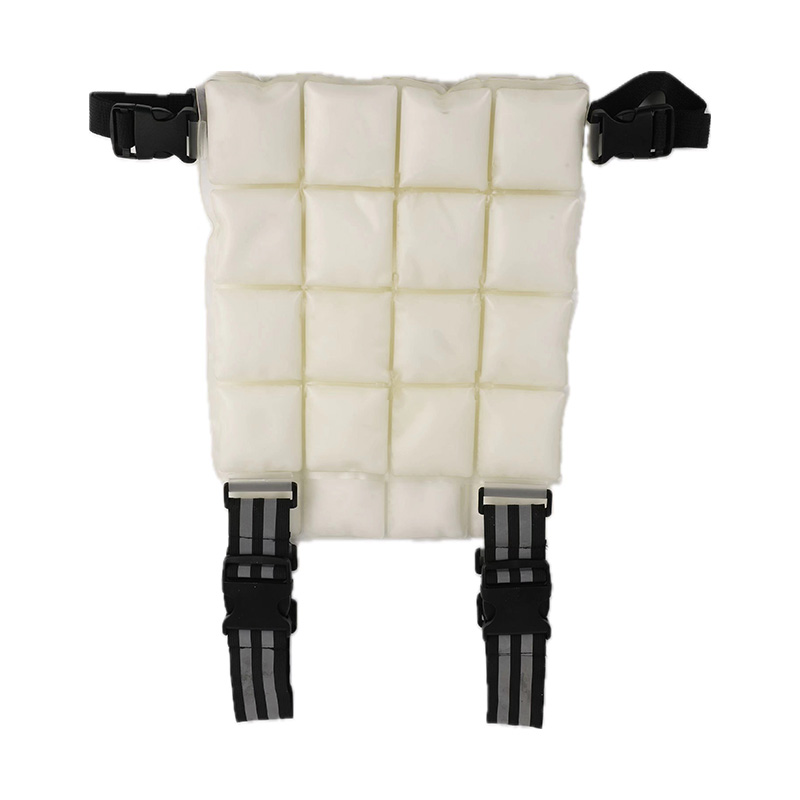 PCM Ice Bag Cooling Vest(FQ-B01)Product IntroductionView Product →
Customization, Branding and Private Label
Most of our overseas customers sell under their own label, so a cooling waistcoat rarely ships as an unbranded product. Colour matching, logo printing, woven labels, packaging and hang tags can all be adapted to your brand, and the same applies to the cooling specification itself: pack size, number and placement of pockets, tape configuration and battery capacity for fan-assisted models.
If you would like to understand how the process works from artwork to finished carton, our page on customized cooling and safety products explains the options we offer. Bringing a clear specification and a target price to the first conversation shortens the sampling cycle considerably.
Quality Control, Lead Times and Shipping
We operate a dedicated quality inspection department and test every batch against the buyer's agreed specification before packing. As a manufacturer rather than a trading company, we control fabric purchasing, cutting, sewing and final inspection under one roof, which keeps both cost and consistency in check.
Production capacity is supported by multiple lines, and because the factory sits within easy reach of the ports of Shanghai and Ningbo, sea freight is our standard shipping method. When a customer's stock runs short or a promotion is brought forward, air freight can be arranged. Every order is tracked against a customer file so that a repeat order matches the previous one in fabric, colour and construction.
Staying Cool Is a Specification, Not a Slogan
A cooling waistcoat works when the mechanism, the fabric and the worksite all point in the same direction. Choose the cooling core to suit the climate, choose the shell to suit the job, and choose a manufacturing partner who can repeat the result batch after batch. That is a far more reliable route to a product that sells in June and is reordered in July.
Whether you are testing your first cooling waistcoat SKU or expanding an existing heat relief range, our team is happy to discuss specifications, samples and timelines. Send us your requirements and we will come back with a concrete proposal.

 3rd Floor, East Gate, No. 2599 Park Road, Sheng Ze Town, Wu Jiang District, Suzhou City, Jiangsu Province
  +86- 0512-63519080
 +86-13584404311
  FQsales1@163.com