
 English
 简体中文

Anyone who has spent a July afternoon on a roof or an airfield apron already knows what a small amount of cold can do for a person. An ice pack vest is the simplest expression of that idea: a vest with sewn-in pockets, and inside those pockets, frozen inserts that sit against the body and pull heat away.
It is not a comfort gadget. For crews working in high heat, it is the piece of equipment that decides how long a shift can safely run, how quickly people recover during a break, and whether a job gets finished before noon. We build these garments in Shengze, a textile town in Jiangsu, and ship them to safety distributors, sports brands and e-commerce sellers in more than thirty countries. Below is what we have learned from those orders — including the questions buyers ask most often before they commit to a first run.
Content
What an Ice Pack Vest Actually Does
Conduction does the work. Cold inserts rest directly against the torso, and heat moves out of the body into the pack until the two reach the same temperature. There is no fan, no battery and nothing to recharge in the field, which is why this design has survived for decades in foundries, kitchens and road crews.
Unlike evaporative cooling, a freezer-pack vest does not depend on dry air or airflow. It behaves the same in a humid warehouse as it does in a desert. What it does depend on is time: most inserts hold usable cold for somewhere between one and three hours, depending on pack mass, insulation and how hard the wearer is working. That window is predictable, and predictability is what safety managers actually need when they plan rotation schedules.
Why the cold goes on the torso
Cooling the chest and back chills a large volume of blood close to the skin, and that cooler blood then circulates back toward the core. This is why a vest outperforms a cold towel on the forehead during sustained work. The neck matters too — a slim pack tucked behind the collar changes how a hard hat feels at hour five, which is the kind of detail that only shows up after a full season of field feedback.
Ice Packs, PCM and Evaporative Fabric: Which One Fits the Job
Most buyers arrive with a price in mind and leave with a cooling method instead. The four options below cover nearly every request we receive, and they are rarely interchangeable once real working conditions are taken into account.
| Cooling method | How the cold reaches the body | Typical usable window | Where it fits best |
|---|---|---|---|
| Frozen gel or water packs | Packs are frozen solid and slipped into vest pockets; conduction does the rest | About 1 to 3 hours | Short, intense exposure; sites with a freezer or cooler nearby |
| Phase change material (PCM) | Packs freeze at a fixed temperature and hold near it while melting | About 2 to 4 hours | Long shifts and steady wear time; users who prefer a mild chill over a shock |
| Evaporative fabric | Water held in the fabric evaporates and carries heat away | Hours, highly dependent on airflow | Dry climates and wearers who are moving; very light pack weight |
| Fan or air-circulation jackets | Battery-powered fans push air through the garment | All day with battery swaps | Humid plants and full shifts; users who dislike cold weight against the skin |
For most of the industrial buyers we work with, the decision narrows to two rows: plain ice packs for cost and immediate chill, or phase change material for a steadier temperature across a long shift. Our own PCM ice bag cooling vest was designed around that second problem, with replaceable packs that freeze at a set point rather than turning rock hard.
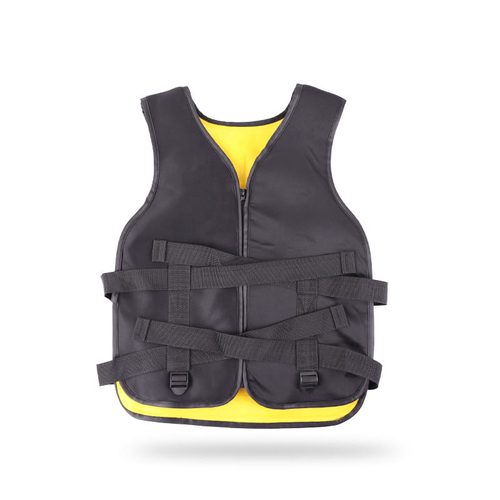
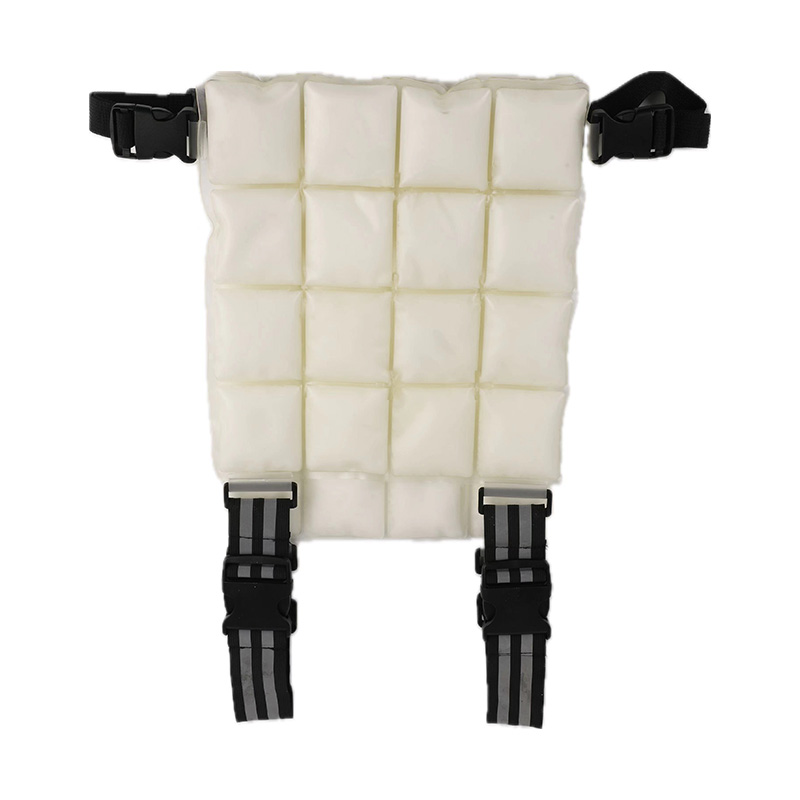 PCM Ice Bag Cooling Vest FQ-B01A reusable PCM vest designed to hold around 24°C after freezing, offering 3–5 hours of cooling for industrial heat exposure.View Product →
Where These Vests Earn Their Keep
Construction, logistics and municipal work
Outdoor labour is the classic use case. Body heat builds from both the sun and the work itself, and a vest worn over a t-shirt adds a controlled layer of cold exactly where a worker cannot reach with water or shade. In these settings we usually recommend larger packs, a mesh shell for breathability, and pockets placed so the wearer can swap inserts without taking the vest off — a small design choice that makes a real difference when a break is only ten minutes long.
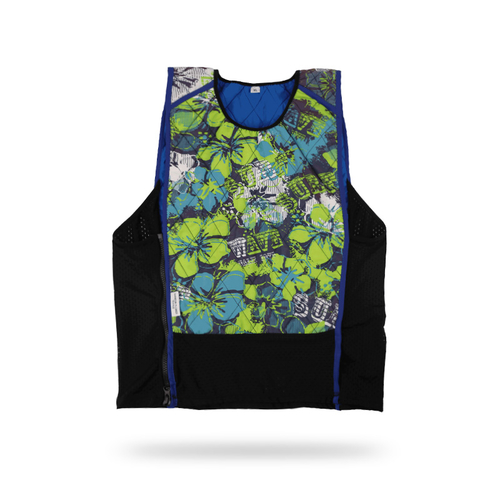
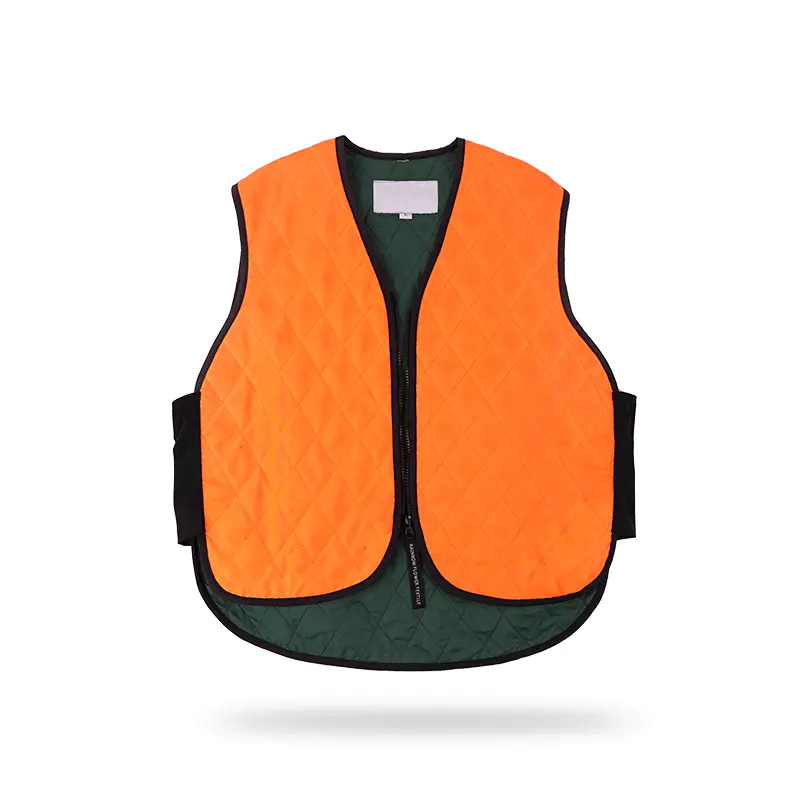 FQ-2003 Evaporative Cooling Vest for Outdoor WorkA lightweight, reusable evaporative vest activated by soaking, offering 5–10 hours of cooling relief for outdoor work in hot conditions.View Product →
Sports, recovery and everyday summer heat
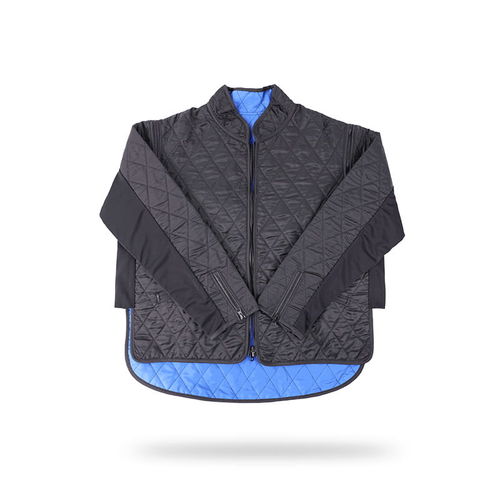
Athletes use freezer-pack vests between efforts rather than during them, to bring core temperature down before the next set. The same logic applies to people managing heat sensitivity, to gardeners, and to anyone who simply runs hot on a commute. Here the priorities shift toward low pack weight, a closer fit and a shell that disappears under a jacket.
Police, security and hi-vis roles
Officers and traffic crews have a harder brief: they need cooling and visibility in the same garment. Reflective tape rated for night work adds weight and stiffness, so the pockets and pack layout have to be planned together with the taping rather than added afterwards. We build these as a single pattern instead of modifying a plain vest later.
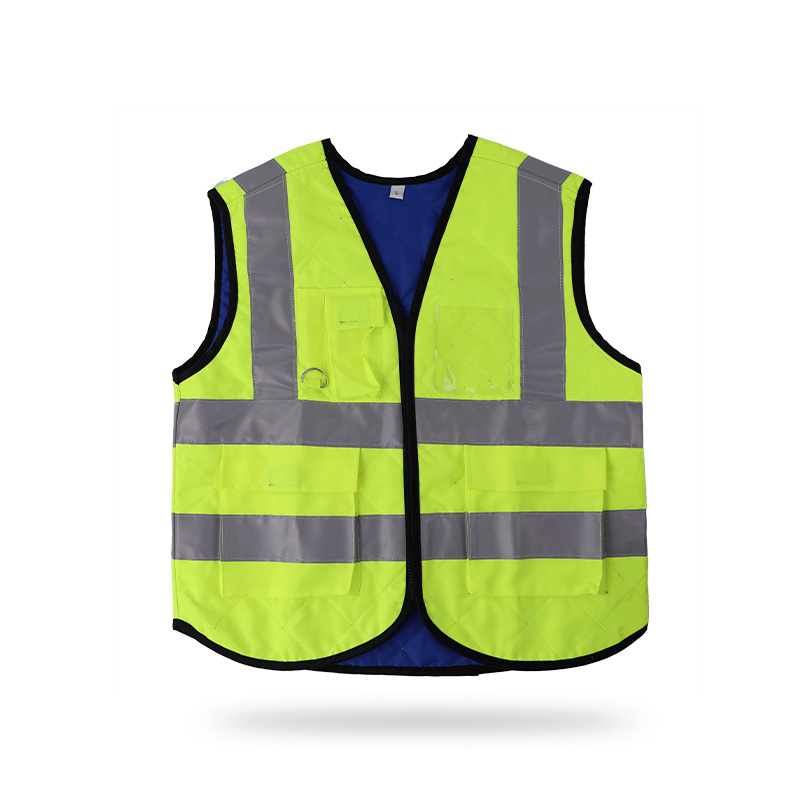 FQ-2012 Reflective Cooling Vest for Traffic SafetyReusable cooling vest with reflective strips front and back, combining visibility with 5–10 hours of soak-activated cooling for traffic and outdoor work.View Product →
How to Choose Without Overthinking It
Once the cooling method is settled, the rest of the decision is mostly about fit and logistics. Five points cover it:
- Total weight when loaded. A vest with six frozen packs can gain several kilograms; check what the wearer will actually carry for a full shift.
- Fit and adjustability. Snug enough for the packs to stay in contact with the torso, loose enough to breathe — side straps or an elastic panel solve most sizing gaps.
- Pocket placement. Chest, upper back and lower back behave differently; front pockets are easier to change, rear pockets stay colder longer.
- Shell fabric. Mesh dries fast and ventilates, ripstop resists abrasion and snagging, and hi-vis shells must meet the reflective standard of the market you sell into.
- Freezer capacity. Two sets of packs per wearer is the practical minimum for continuous use, and that means freezer space is part of the purchasing decision, not an afterthought.
Care, Freezer Space and Other Small Annoyances
Condensation is the complaint we hear most. A cold pack in humid air wets the fabric around it, so a breathable inner lining and a quick-dry shell keep the wearer comfortable rather than clammy. Wash the vest with the packs removed, close the zips, and let it air dry — machine heat is unkind to both reflective tape and coated fabrics.
A simple rotation routine keeps a shift running smoothly:
- Freeze one set of packs flat and fully solid; a half-frozen pack gives a fraction of the cooling time.
- Load the vest just before the wearer goes out, not an hour early.
- Swap packs at the scheduled break and return the warm set to the freezer immediately.
- Inspect packs weekly for splits, bulging or leaking gel, and retire the damaged ones.
The same discipline applies on the buying side: order spare packs with the first shipment, because a vest without frozen inserts is just a piece of fabric with pockets.
Customizing and Buying in Volume
Most of our customers are not buying one vest. They are building a range — a colour story for a sports brand, a hi-vis version for a safety distributor, a logo-printed model for a corporate uniform programme. That usually means choosing shell colours, adding reflective tape to a standard pattern, adjusting the pocket count, and sizing across a full range rather than a single unisex fit. Our customization options cover those variables, and small sample runs are the normal first step before a bulk order.
Production happens under one roof, which is the main reason we can keep a custom order on schedule. If you want to see how the lines, the quality checks and the packing process are set up, you can take a look inside our factory. Shipping from Jiangsu through Shanghai or Ningbo is routine, and urgent orders can move by air when a season is already underway.
The Questions Buyers Ask Most
How long will one set of packs last?
Between one and three hours in most working conditions, and closer to four with a good PCM insert. Ambient temperature, physical effort and how well the pack is insulated all move that number, so treat any single figure as a range rather than a guarantee.
Does a wet vest work as well as a frozen one?
No — they are different technologies. A soaked evaporative vest depends on airflow and low humidity; a freezer-pack vest works regardless of humidity but has a finite cold reserve. Neither is universally better.
Is a heavy vest a problem for workers?
It can be. Weight on the shoulders over eight hours is tiring, which is why we offer lighter pack options and distribute pockets across the back rather than concentrating mass at the front.
An ice pack vest is a simple product with a surprisingly large number of small decisions inside it: how much cold, for how long, on which part of the body, and how the wearer recharges it halfway through a shift. Get those right and it becomes equipment people ask for by name. Get them wrong and it becomes a heavy jacket that nobody wears after the second week. If you are unsure which version suits your market, tell us the working conditions and we will point you toward the pattern that fits — that conversation is usually faster than reading another specification sheet.


 3rd Floor, East Gate, No. 2599 Park Road, Sheng Ze Town, Wu Jiang District, Suzhou City, Jiangsu Province
 +86- 0512-63519080
 +86-13584404311
 FQsales1@163.com