
 English
 简体中文

Ask anyone in procurement what a high visibility vest is and the answer usually starts with colour: fluorescent yellow, orange, or that lime that manages to look both industrial and modern at the same time. Colour matters, but it is only one layer of the story. A vest is a piece of safety equipment with a measurable job to do, which is to make a person detectable in daylight, at dusk, and in a driver's headlights long before the wearer can be identified. Everything else, from the mesh weight to the tape pattern to the way the armholes are bound, either supports that job or quietly undermines it.
We build reflective workwear and cooling workwear in Shengze, in Jiangsu Province, and most of the questions we get from overseas buyers come back to the same handful of points. So we have collected them here, in the order they usually come up.
Content
- 1 What a High Visibility Vest Actually Does
- 2 Class Levels: Matching Coverage to the Road
- 3 Fabric, Tape and Stitching: Where Cheap Vests Fail
- 4 When Visibility and Heat Arrive Together
- 5 Matching the Vest to the Crew
- 6 Bulk Buying: Questions Worth Asking Before You Order
- 7 Care That Keeps the Tape Working
What a High Visibility Vest Actually Does
A hi-vis vest works through two different mechanisms, and they behave very differently once the sun goes down. Confusing the two is the most common reason a buyer ends up with a garment that looks impressive in a showroom and disappoints on site.
Daylight conspicuity comes from the background fabric
The fluorescent background fabric absorbs ultraviolet light and re-emits it in the visible spectrum, which makes the garment appear brighter than everything around it. This is why a good fluorescent lime reads so strongly against grey asphalt or a muddy site at midday. The effect fades quickly at night, and it also degrades with UV exposure over the life of the garment, which is one reason older vests look tired even when the shell is still intact.
Night-time performance comes from the retroreflective tape
Retroreflective tape sends light back towards its source rather than scattering it, so a driver's headlights return to the driver's eyes instead of disappearing into the dark. If you want the fuller technical explanation, our article on how reflective vests work walks through the optics step by step. The practical point for buyers is simpler: bright fabric alone does almost nothing at night, and tape only performs when light actually hits it at a reasonable angle. A vest with narrow bands, dirty tape or tape that has been stitched too tightly will fail in exactly the conditions where it is supposed to matter most.
Class Levels: Matching Coverage to the Road
Two standards dominate international purchasing. EN ISO 20471 is the European framework, and ANSI/ISEA 107 is the North American one. Both work on the same principle: the higher the class, the more square centimetres of background and retroreflective material the garment must carry, and the more demanding the environment it is intended for. Neither replaces the risk assessment that your client's safety officer will run, but both give you a shared vocabulary.
| Class level | Typical setting | What the garment usually looks like |
|---|---|---|
| Class 1 (EN ISO 20471) / Type O | Warehouses, yards with low-speed traffic, event stewarding, off-road sites | Simple vest body with one or two bands, light mesh construction |
| Class 2 | Road works, construction sites, logistics and depot work, airport aprons | Vest with two horizontal bands plus two vertical braces over the shoulders |
| Class 3 | High-speed roads, night rail maintenance, emergency and traffic response | Class 2 coverage extended with sleeves or trousers in the same certified fabric |
Class 2 is the workhorse of the range, and most of the vests we ship are built to that level. One caution worth repeating to clients: a class claim belongs to a tested combination of fabric and tape. Mixing a vest from one maker with trousers from another can quietly invalidate the claim, even when both garments look correct on the shelf.
Fabric, Tape and Stitching: Where Cheap Vests Fail
Two vests can look identical in a photo and be completely different products. The differences show up in month three, not on the delivery day.
Tape quality is not visible at a glance
Glass-bead tape and microprismatic tape both look silver under a desk lamp, but they differ in brightness, in how many home-wash cycles they survive, and in how they behave when the tape is creased. A low-grade tape may pass a first inspection and then dull after a dozen washes. We ask suppliers for wash-durability data on every roll we buy, and we keep the batch reference so a repeat order matches the previous one rather than merely resembling it.
The details that decide service life
- Binding on the neck, armholes and hem, which stops the mesh from fraying after repeated laundering.
- Bar-tacked stress points where the front panels meet the shoulders, since that is where vests tear first.
- Tape sewn with controlled tension. Too loose and it puckers; too tight and the edge lifts.
- Sizing that leaves enough room to wear the vest over a jacket without stretching the tape bands apart.
- Consistent fluorescent shade from batch to batch, so a crew photographed in March matches the crew photographed in June.
When Visibility and Heat Arrive Together
Here is the tension nobody enjoys discussing. The days when a vest matters most are often the days when nobody wants to wear one. More coverage means more heat, and a worker who is overheating will quietly take the vest off, hang it on a fence and carry on. That single habit defeats every certification printed on the label.
Part of our range exists specifically for that situation. The 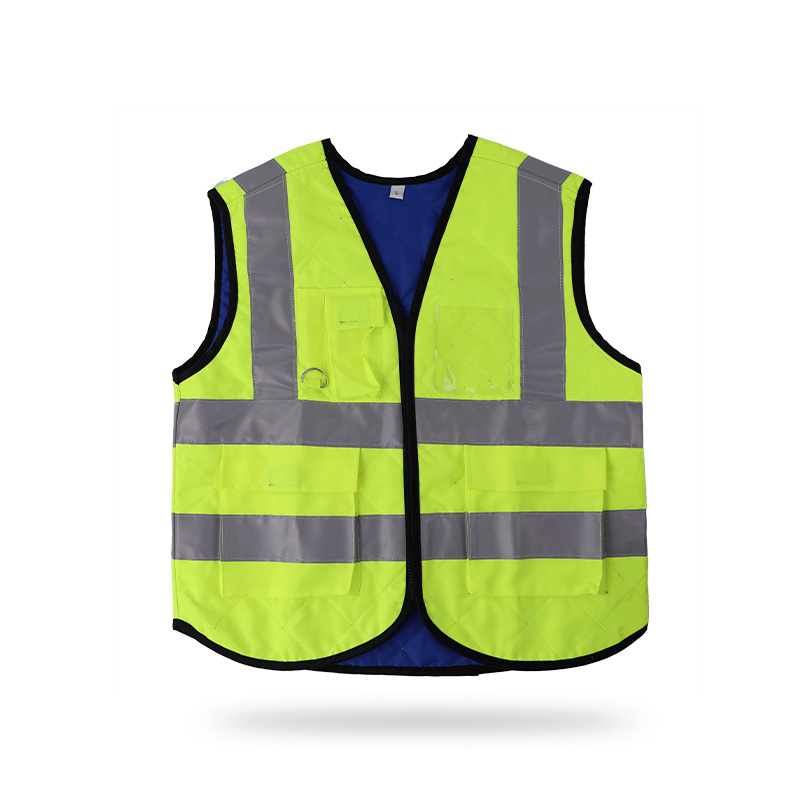 Outdoor Reflective Cooling Vest FQ-2012Lightweight pullover cooling vest with front and back reflective strips, breathable mesh and reusable soak-activated relief for hot outdoor work.View Product → is built to keep the tape where drivers actually look, across the shoulders, chest and waist, while the body of the garment works on airflow and moisture rather than on trapping heat. It is a compromise by design: enough coverage to do the job, light enough that the wearer forgets about it by mid-morning.
For crews who need a strong daytime signal but less structure than a full work vest, the 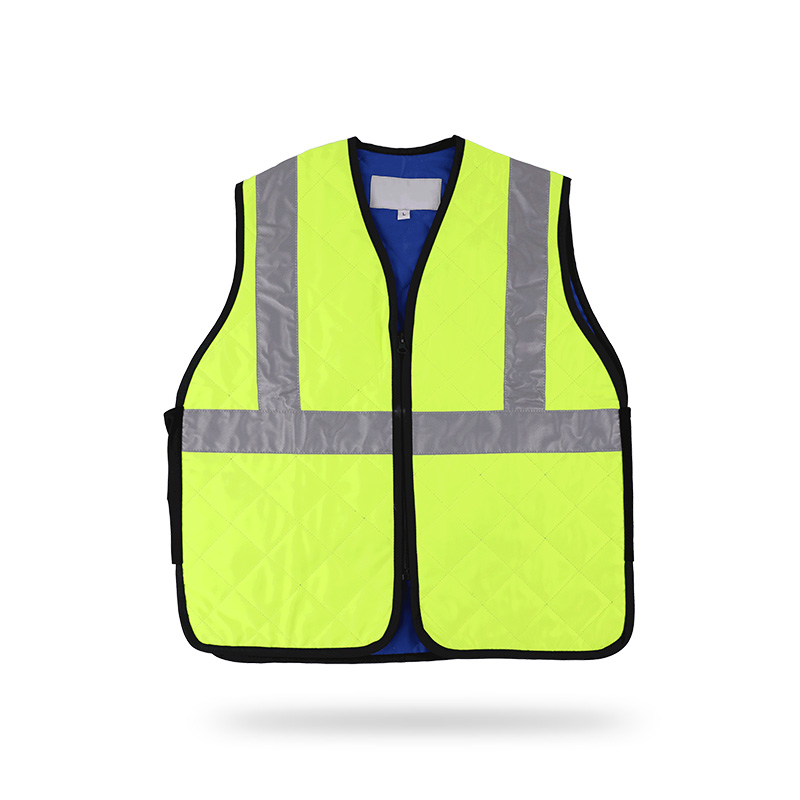 Lime Traffic Cooling Waistcoat FQ-2013High-visibility pullover waistcoat with reflective strips, breathable mesh and evaporative cooling for construction, road and utility crews.View Product → takes the same thinking in a lighter direction. Neither garment replaces a certified high visibility vest where the standard demands one. What they do is reduce the incentive to take the vest off.
Matching the Vest to the Crew
Job role changes the specification more than most buyers expect. Construction crews usually want pockets, a solid front and tape that survives contact with scaffolding. Highway and traffic teams need the highest practical class and prefer orange for contrast against rural green and grey. Warehouse and logistics staff often need less coverage but more breathability. Event marshals want something that packs flat and looks presentable. Sanitation and municipal crews tend to prioritise washability, because their vests go through a laundry cycle that construction vests never see.
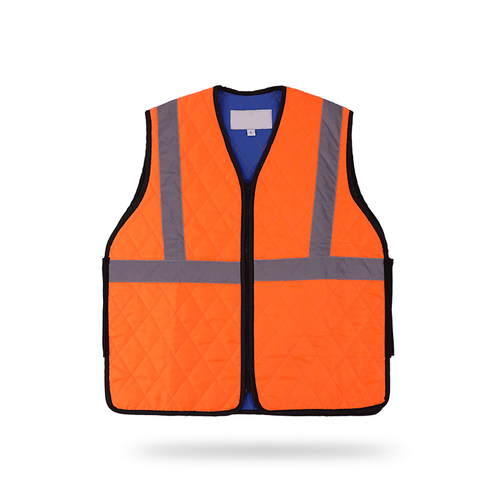
Law enforcement and security are a category of their own, since the vest has to look professional while still doing a safety job in a hot car park. Our  Reflective Police Cooling Vest FQ-G01Reusable cooling safety vest with front and back reflective strips, designed for police visibility and heat relief during traffic and emergency duties.View Product → was developed around that brief, and if a department needs reflective tape specified to a particular class, that is a conversation we are always happy to have during sampling rather than after delivery.
Bulk Buying: Questions Worth Asking Before You Order
We run a 4,000 square metre plant with in-house design, an independent quality team and our own export licence, which means the person answering your technical questions is usually standing a short walk from the sewing floor. You can read more about the setup on our factory page. Whatever supplier you choose, these are the questions that separate a smooth order from an expensive lesson.
- Which class is being claimed, and can you see the test report for the exact fabric and tape combination in the offer?
- How many home-wash cycles is the tape rated for, and does the care label match that rating?
- What is the accepted colour tolerance between production batches?
- Can the tape layout be adjusted around a logo panel or a pocket without losing the class coverage?
- What are the sampling and bulk lead times, and how is the carton packed for sea freight?
Care That Keeps the Tape Working
A certified vest stops being certified the moment it is cleaned the wrong way, so the care instructions are part of the product rather than an afterthought. The habits that matter most are unglamorous:
- Wash at a moderate temperature with a mild detergent, following the label rather than instinct.
- Skip fabric softener and bleach. Softener leaves a film on the bead surface that dulls the return of light.
- Close fasteners and turn the garment inside out before washing to protect the tape from abrasion.
- Air dry whenever possible; high heat in a tumble dryer ages both the tape and the fluorescent dye.
- Inspect regularly for scratches, lifting edges or peeling, and replace rather than repair. Stitched-on patches and marker pen do not restore retroreflection.
- Store away from direct sunlight, which quietly degrades the background fabric even when the vest is not being worn.
None of this is complicated, but the details compound. A buyer who asks about tape durability, wash cycles and class coverage at the quotation stage usually ends up with a garment that survives a full season and gets reordered. A buyer who compares only the unit price usually ends up replacing the same vest twice.
If you are working through a specification now, send us the class you need, the climate your crew works in and roughly how many units per size. We will tell you honestly what we can make, what we would change, and where a lighter or heavier construction would serve you better. Samples and swatches are the easiest place to start.


 3rd Floor, East Gate, No. 2599 Park Road, Sheng Ze Town, Wu Jiang District, Suzhou City, Jiangsu Province
 +86- 0512-63519080
 +86-13584404311
 FQsales1@163.com