
 English
 简体中文
简体中文
You are sourcing branded safety vests for a team that works near traffic or in low-light conditions, and you have already seen enough listings to know that price alone is not a safe guide. The real question is whether the vest will keep your workers visible, comfortable, and compliant over months of daily use, while still carrying your logo cleanly. The practical answer is that a good branded safety vest depends on four measurable factors: reflective tape performance, fabric and fit, customization quality, and how well the vest survives regular cleaning.
Content
- 1 Start with the Visibility Standard
- 2 Know the Fabric: Breathability versus Wear Resistance
- 3 Branding and Customization: What the Supplier Needs to Ask
- 4 Fit, Sizing, and Real-World Comfort
- 5 Maintenance: How Long Will the Brand Survive?
- 6 Evaluating a Supplier for Bulk Orders
- 7 Checklist for Your Next Purchase
- 8 Final Recommendation
Start with the Visibility Standard
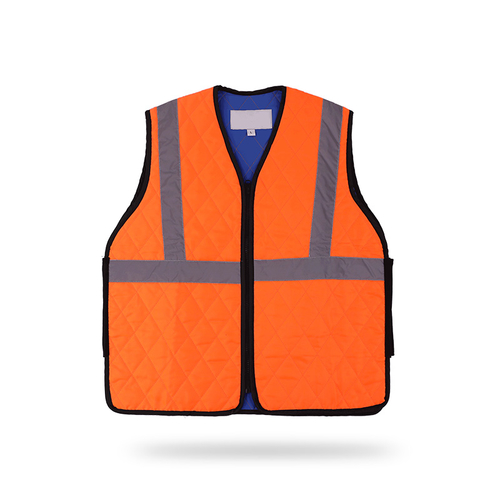
Before looking at branding options, confirm the reflective performance. A vest only earns its purpose when the retroreflective tape returns light back to the source, which is what makes a driver see a worker at night. The brightness of the tape is not cosmetic; it is a safety specification. Two common performance levels are EN ISO 20471 Class 1 and Class 2 in Europe, and ANSI/ISEA 107 Type R Class 2 or Class 3 in North America. For most roadside work, Class 2 is the minimum practical choice, while Class 3 is used for higher-risk zones such as highway construction.
The tape itself consists of glass beads or microprismatic structures. Microprismatic tape generally offers higher retroreflection values at long distances, but it can be more sensitive to heavy washing. Beaded tape is more forgiving in industrial laundering. If your workers are in dirty environments or the vests will be washed often, ask the supplier for the exact brightness value and the recommended wash cycle count. A supplier that can provide test reports for tape brightness and washing durability is a strong signal of manufacturing discipline.
Know the Fabric: Breathability versus Wear Resistance
The base fabric matters more than most buyers expect. A heavy polyester is durable, but it traps heat and moisture. In summer work, a non-breathable vest can become a heat hazard, which is why the industry has moved toward mesh-backed and cooling-integrated designs. For a branded safety vest used in warm months, look for high-visibility mesh fabric that passes the same class requirements as solid fabric. The mesh allows airflow while the tape still anchors the safety rating.
For colder or windier conditions, you might want a vest with a solid front and a breathable back, or a lightweight polyester that provides some weather protection. The trade-off is always between durability and comfort. If your team works in multiple seasons, a hybrid approach may be the best investment: a standard reflective vest for cool days and a cooling reflective vest for heat. The site offers an outdoor reflective cooling vest that combines reflective protection with evaporative cooling, which addresses the summer visibility problem directly.
At the same time, check the color of the fluorescent background. Fluorescent yellow-green is the most visible under daylight, while fluorescent orange-red stands out better in certain backgrounds. Your choice should match your work environment. A branded safety vest is not just a banner for your logo; the fluorescent material is a functional element of the safety system.
Branding and Customization: What the Supplier Needs to Ask
Custom branding is where the quality gap between suppliers becomes obvious. A printed logo on a safety vest can crack or fade after a few washes, especially if the print is applied over the fluorescent fabric without proper treatment. The supplier should ask you about the logo size, color, and placement, as well as whether you need one-color or multi-color printing. They should also indicate whether the logo will be printed, transferred, or embroidered. For high-visibility vests, printed transfers are common, but the transfer must be compatible with the fluorescent material to avoid color drift or adhesion failure.
If you are ordering for a fleet or a large team, you may also need the logo on the front and the back, and perhaps a reflective strip across the back for additional visibility. The positioning must not interfere with the required reflective tape layout. If the safety standard is strict, the logo cannot replace or cover mandatory reflective bands. A professional supplier will produce a mock-up before production, and will also verify the tape layout against the standard you are targeting. Many manufacturers also offer private label packaging and hang tags, which is useful if you are reselling the vests rather than using them internally.
When choosing a manufacturer, the level of customization support matters. The site's customization page shows how a supplier with in-house development capability can adapt products to your exact specification, from material selection to stitching details. This is a practical advantage over a trading company that simply resells stock designs.
Fit, Sizing, and Real-World Comfort
A vest that is too loose can snag on machinery or flap in the wind, while one that is too tight restricts movement and discourages workers from wearing it consistently. The most overlooked spec is the sizing range. If your workforce spans a wide range of body types, you need a sizing chart that covers at least S to 3XL or similar. There are also unisex and women-specific fits. A women's cut is not a marketing detail; it reduces the gap at the waist and improves comfort without compromising the reflective area.
Additional features that improve compliance include adjustable waist straps, expandable pockets, and a zipper front that is easy to operate with gloves. The layout of the pockets matters as well. A chest pocket for a phone or ID badge is common, but make sure the pocket does not push the reflective tape out of alignment. A vest that is comfortable to wear is more likely to be worn, and a worn vest is the only vest that protects anyone.
Maintenance: How Long Will the Brand Survive?
Safety vests are often treated as disposable items, but a branded vest should not be. The lifespan of the reflective tape depends on the number of wash cycles. Beaded tape can handle roughly 25 machine washes at 40 degrees Celsius, while microprismatic tape may lose its brightness faster if the washing is aggressive. Industrial laundering, high heat, and abrasive chemicals can all accelerate the degradation. It is also important to avoid ironing the reflective tape directly and to avoid storing the vests folded with heavy pressure on the tape creases.
A practical way to address this is to ask the supplier for the maximum wash cycle count and the expected degradation after that. Some suppliers provide test data that shows the retroreflection value after 10, 20, and 30 washes. This is important for your total cost of ownership. If a cheap vest loses its visibility after five washes, it is actually more expensive than a better-made vest that lasts 30 washes and keeps your branding intact.
The correct cleaning method also extends the life of the vest. In general, you should close the velcro before washing, use a mild detergent, and avoid bleach or fabric softeners. Drying on a low setting or line-drying will protect the tape. If you are handling hundreds of vests, this information should be shared with your laundry team. The site has a useful guide on how to clean a reflective vest that covers these practical rules in detail.
Evaluating a Supplier for Bulk Orders
When you are buying branded safety vests in bulk, you are not just buying a product; you are buying a supplier's ability to deliver consistent quality on a schedule. The supplier should be able to produce a pre-production sample for your approval. They should also provide a clear lead time and be ready to share production progress. In the textile industry, a manufacturer located near a major fabric hub can often shorten lead times and adjust materials more flexibly.
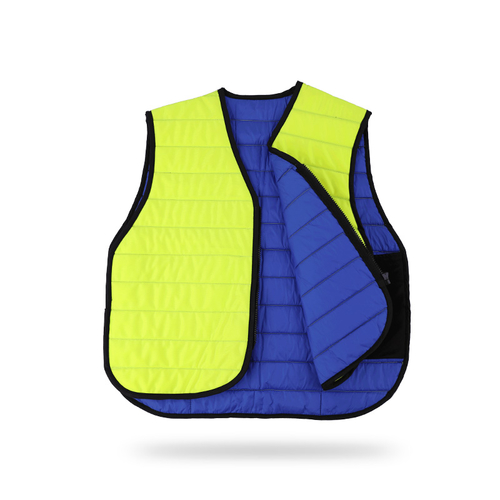
If you are considering a cooling safety vest for summer use, make sure the cooling element does not compromise the reflective certification. A vest can be both cooling and reflective if the cooling pack is concealed inside a pocket or channel, and the reflective tape is placed on the outer surface. The "lime cooling waistcoat" is one example where the fluorescent color and the cooling function can be combined, but always verify the final product against the standard you are targeting.
Supplier transparency is key. Ask about the reflective tape supplier, the base fabric vendor, and the factory's own quality inspection process. A reliable B2B supplier will have a quality control team that checks each batch, and they should be able to explain, step by step, how they verify the reflective performance. These details may seem administrative, but they protect you from ordering a few thousand vests that fail inspection on site.
Checklist for Your Next Purchase
If you are evaluating a potential order, work through this short list. It can save you from the most common buyer mistakes.
- Confirm the safety standard and the class level required for your specific work zone.
- Request the retroreflection value in cd/(lx·m²) and the expected value after multiple wash cycles.
- Choose the base fabric based on the season and the work environment.
- Verify the logo method and its durability. Ask for a wash test on the printed logo.
- Check the sizing range and whether a women's fit is available.
- Ask for a pre-production sample and sign off on the reflective tape placement.
- Clarify the washing and storage instructions for your maintenance team.
Each of these points translates directly into worker safety and long-term cost control.
Final Recommendation
A branded safety vest should hold the same safety rating as an unbranded one and still carry your identity after months of use. Look for a supplier that treats visibility as the top priority, supports customization with technical expertise, and can prove its durability through test data. The margin between the cheapest offer and the most reliable offer is usually a small percentage of the total cost, but it can be the difference between a vest that workers actually wear and one that stays in the truck. Choose your supplier based on the measurable criteria above, and the safety of your team will be better protected.

 3rd Floor, East Gate, No. 2599 Park Road, Sheng Ze Town, Wu Jiang District, Suzhou City, Jiangsu Province
  +86- 0512-63519080
 +86-13584404311
  FQsales1@163.com