
 English
 简体中文
简体中文
At a highway bridge project in late July, a crew member wearing a standard orange safety vest spends most of the shift wringing sweat out of his shirt. The vest is still bright enough to meet inspection, but the fabric traps heat and the straps dig into his shoulders. He takes it off between breaks, which means he is not visible when a crane swings overhead. That is the problem with choosing a construction safety vest based only on reflective tape. A vest that does not breathe, fit, or survive repeated washing will end up off the worker, and a vest that is off the worker creates the exact hazard it was supposed to prevent. The right choice balances visibility, heat control, durability, and comfort in a way that keeps the vest on throughout the shift.
Content
What a construction safety vest must do
A construction safety vest is a personal protective item, but it has to do more than satisfy an inspector. On a real site, it is worn for eight to ten hours, often in direct sun, over layers that may already be uncomfortable. A useful vest needs to maintain 360-degree visibility, allow unrestricted movement, manage heat and moisture, and hold up to abrasion from rebar, concrete, and hoisting gear. Each requirement affects the others. A heavy fabric that resists tearing may also trap body heat; a lightweight mesh that keeps a worker cool may tear after a few weeks. The compromise has to be based on the actual job, the exposure, and the climate.
Visibility is the non-negotiable part. Construction sites are full of moving equipment, uneven ground, and operators who rely on visual cues. The vest has to make a worker recognizable from a distance, from multiple angles, and in low light as well as bright sunlight. That is why the reflective tape and background material are regulated by ANSI/ISEA 107, not chosen arbitrarily.
ANSI/ISEA classes explained for construction
The ANSI/ISEA 107 standard divides high-visibility apparel into three classes based on the amount of background material and reflective tape on the garment. The class a contractor chooses should match the speed of traffic, the darkness of the work zone, and the distance at which the worker needs to be seen.
| Class | Typical construction role | Minimum background material | Minimum combined performance material |
|---|---|---|---|
| Class 1 | Workers in low-traffic areas or off-road sites with limited vehicle speeds | 0.14 m2 | 0.10 m2 |
| Class 2 | Road construction, utility crews, flaggers, and workers near moving equipment | 0.50 m2 | 0.13 m2 |
| Class 3 | Highway crews in high-speed traffic, night work, or poor visibility conditions | 0.80 m2 | 0.20 m2 |
For most construction jobs that involve traffic control or moving machinery, Class 2 is the practical baseline. It gives enough background fabric to recognize the worker as a person, not just a strip of tape. For highway work in high-speed traffic or overnight shifts, Class 3 is the safer choice because it requires more background material and a higher level of performance tape. Class 1 vests are rare in construction but can be acceptable in enclosed areas away from moving vehicles.
Heat stress and why cooling matters
When the temperature passes 32°C and a worker is standing on hot asphalt, a standard vest becomes a second layer of insulation. The fabric that carries the reflective tape often has a dense weave to hold the tape firmly, and that same weave traps body heat. A worker who feels overheated is more likely to unzip the vest, roll it up, or take it off completely. That defeats the purpose of the garment.
Cooling features solve this while keeping the vest on the body. Some construction safety vests include evaporative cooling panels that hold water and release it slowly; others use phase-change material (PCM) inserts that absorb body heat and stay cool for a few hours. Reflective cooling vests combine high-visibility tape with these cooling elements, so the worker gets both visibility and heat relief in one garment. A vest like this can reduce the need for frequent breaks and helps maintain focus in the middle of a long shift.
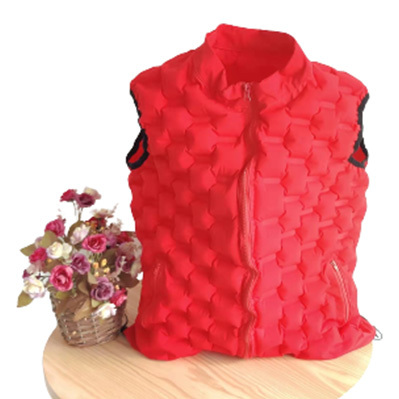
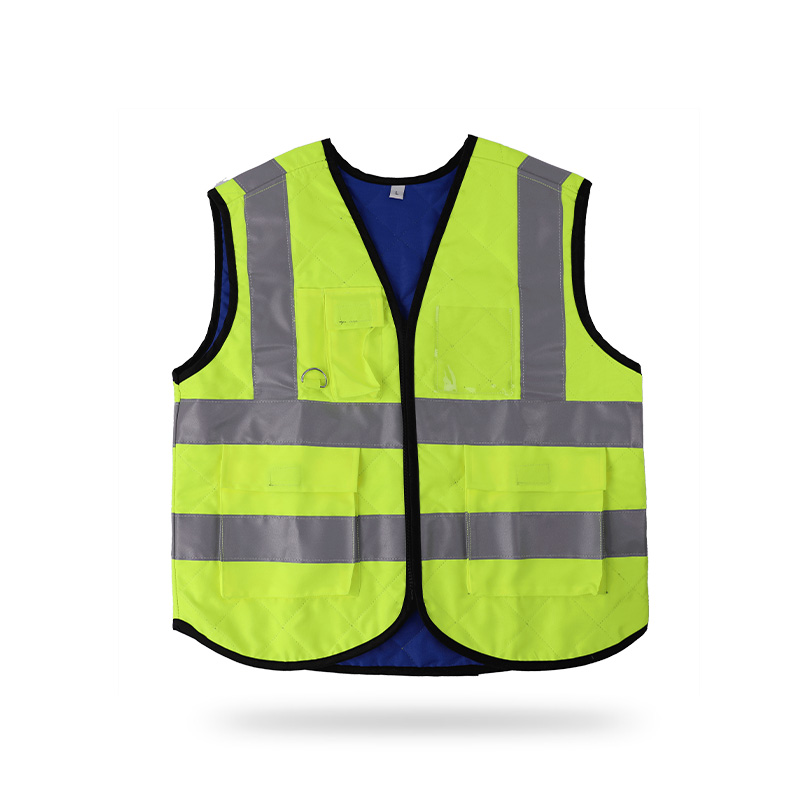 Reflective Cooling Vest with Evaporative Panels for Construction WorkersThis high-visibility vest combines reflective tape with cooling inserts that provide 5-10 hours of relief. It helps workers stay alert and compliant, reducing heat-related incidents on site.View Product →
In a busy work zone, that cooling layer is not a luxury. It is a practical way to keep a worker alert and covered by the required visibility material. Contractors who offer cooling versions of standard safety vests often see fewer heat-related incidents and a more stable crew over the course of the summer.
Fabric, tape, and durability details
The fabric choice determines both breathability and service life. Polyester mesh lets air move through the vest, which is useful in hot weather, but it can snag on exposed rebar or rough concrete. A heavier polyester or a blended fabric resists abrasion better but needs careful ventilation paneling. Some manufacturers use a mesh back panel with solid front panels to balance airflow and wear resistance.
The reflective tape itself comes in two broad types: glass bead and micro prismatic. Glass bead tape is cost-effective and meets many ANSI Class 2 requirements, but it loses brightness faster when rubbed against hard surfaces. Micro prismatic tape is more durable and launches a stronger signal back to headlights and work light. For construction sites where workers are in contact with brick, metal, and concrete, micro prismatic tape usually provides a better return on investment over the life of the vest.
Workers wearing hard hats also lose heat from their heads and necks. A cooling pad that fits inside the helmet can absorb that heat without removing the helmet. This is an important accessory in construction, where a hot helmet may be pushed off or worn loose, creating a head safety risk. A hard hat cooling pad is a simple addition that supports both comfort and compliance.
 PVA Cooling Neck Pad for Hard Hat LinersAttaches to hard hat liners to cool the neck and head, offering 5-10 hours of relief per soak. It supports comfort and safety compliance in hot construction environments.View Product →
When evaluating a supplier, ask about the tape brightness after 25 to 50 wash cycles and inspect the stitching around the tape edges. Loose stitching lets water into the tape adhesive, which causes the tape to peel away from the fabric. A vest with reinforced seams and a high-quality tape will look the same after a few laundry loads as it did on day one.
Fit and pocket placement
Fit is not about fashion; it is about safety. A vest that is too loose can snag on handrails, rebar, or the edges of equipment, pulling the worker off balance. A vest that is too tight restricts arm movement when lifting and shoveling. Look for adjustable side tabs or elastic panels that allow the vest to move with the body. The vest should stay closed without riding up, even when a worker bends down to tie rebar or push a wheelbarrow.
Pocket placement determines whether the worker actually uses the vest as a utility layer. A clear chest pocket for an ID card that fits a standing worker is standard. Extra pockets for a radio, phone, tape measure, or small tools should be positioned where they do not interfere with bending. Many construction vests also include a D-ring or a dedicated loop for attaching gear. The best test is to wear the vest with the tools you actually carry, then try the movements you perform every day.
Consider the closure type as well. Zipper closures keep a vest closed more reliably than hook-and-loop fasteners, especially when a worker is moving in and out of trucks and around obstacles. But a zipper can break easily on a jobsite; look for a reinforced zipper with large pull tabs that can be operated with gloves on.
Customization and sourcing for construction companies
Contractors who buy vests in volume have extra reasons to review specifications. One purchase order usually needs to cover multiple crews, shift schedules, and weather conditions, so the ability to customize is valuable. A supplier that offers customization services can add company logos, change tape width, adjust background colors, and reposition pockets to match specific job duties. This makes the vest a branded safety item that workers recognize as part of the company's equipment.
For large orders, sourcing directly from a factory can reduce both lead time and cost per unit. A manufacturer with in-house production and export capability controls quality inspections, fabric selection, and delivery schedules from one place. This is useful when the order has strict size runs or a tight deadline. A supplier that manages the full chain from raw fabric to finished product also makes it easier to adjust specifications mid-order without involving a trading company.
When comparing quotes, do not base the decision on unit price alone. Ask for the fabric composition, the reflective tape class, the washing instructions, and the replacement policy. Confirm the minimum order quantity and whether mixed sizes or colors are allowed in one container. These details determine the actual cost per worker per month, not the initial purchase price.
Maintenance and replacement
Washing is where many safety vests begin to fail. Reflective tape is not designed for aggressive cleaning. Use cold water, a mild detergent, and a gentle cycle. Do not bleach, do not tumble dry on high, and do not iron directly over the tape. Heat damages the adhesive and the micro-prismatic structure, causing the tape to crack and lose reflectivity. High heat can also shrink the fabric, warping the fit and leaving the tape wrinkled.
After each wash, inspect the vest for tape edges that are lifting, background fabric that is thinning, and closures that are no longer staying secured. A vest with cracked tape should be taken out of service immediately. The ANSI/ISEA standard provides performance requirements for new garments, but a worn-out vest no longer meets the stated visibility level. Most manufacturers recommend replacing a high-visibility vest after two full seasons or after 25 to 50 washes, but the actual condition matters more than the calendar.
Store the vests in a dry, dark place when not in use. Prolonged sunlight can fade the fluorescent background color and reduce the contrast needed for high visibility. Folding or hanging them in a way that allows the tape to rest without creasing will extend the life of the reflective material.
A quick buying checklist
- Confirm the ANSI/ISEA class you actually need based on traffic speed and work-zone lighting. Class 2 covers most construction, Class 3 for highway or night work.
- Choose a fabric that balances air permeability with abrasion resistance. If the job is hot, look for mesh or evaporative cooling panels.
- Select micro prismatic tape if the workers will rub against hard surfaces; it lasts longer and keeps its brightness through more wash cycles.
- Test the fit and closure type. The vest should stay on without being tight, and the zipper or fasteners should work with work gloves on.
- Check the supplier's customization capability and production capacity, especially for brand logos, size runs, and mixed orders.



 3rd Floor, East Gate, No. 2599 Park Road, Sheng Ze Town, Wu Jiang District, Suzhou City, Jiangsu Province
  +86- 0512-63519080
 +86-13584404311
  FQsales1@163.com